Fifteen days, twelve ports, and four nations later, I came home from the Viking British Isles Explorer with a list of moments I did not expect, and a few lessons worth passing on before you book your own.
I sailed this itinerary aboard Viking Neptune, from London's Tilbury port all the way to Bergen, Norway, across fifteen days and twelve ports. It is one of those voyages that sounds simple on paper, England, Ireland, Wales, Scotland, and a final Norwegian flourish, and turns out to be anything but simple once you are actually standing in it. I want to walk you through eleven highlights from the trip, in the order we experienced them, along with the practical lessons that came out of each one.
London: The Ravens and the Crown Jewels
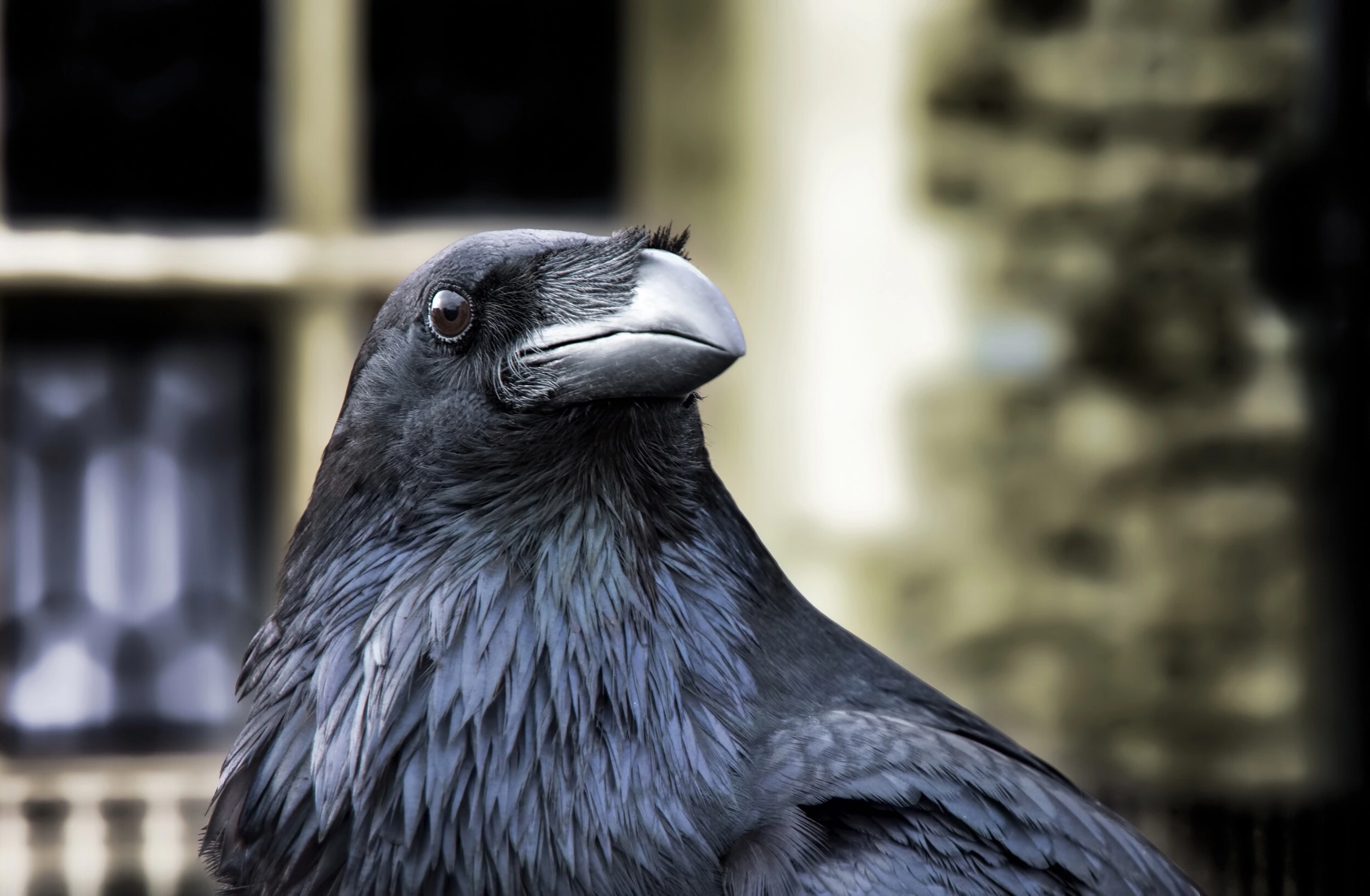
We were barely into the Tower of London tour when we heard it. A deep, guttural sound from somewhere in the courtyard, not what you expect inside one of the world's most famous landmarks. The ravens.
At least six of them must live at the Tower at all times, by royal decree. Legend says that if they ever leave, the Tower and the Kingdom will fall, and each one has a dedicated Ravenmaster, a Yeoman Warder whose entire role is looking after them. This place carries more history than almost anywhere on earth. Anne Boleyn was imprisoned and executed here. Sir Walter Raleigh spent thirteen years as a prisoner. The Beefeaters have guarded its secrets for over five centuries, and the Crown Jewels have been protected here since the fourteenth century.
Then we reached them. St Edward's Crown, used at coronations of British monarchs for centuries. The Cullinan I, five hundred and thirty carats, the largest clear cut colourless diamond in the world. The Koh-i-Noor, one of the most famous and controversial gems on earth. You move through on a slow walkway. The light catches every stone, and for a moment you forget to breathe.
The Tower draws millions of visitors every year, and we walked straight in with no queue at all. One of the most common questions I get about this voyage is when to go. Late spring and early autumn are the sweet spots, mild temperatures, beautiful landscapes, and far fewer crowds than peak summer. In summer the days are long and light until late evening, which is magical, but the crowds are real. What made our voyage special is that because we sailed in spring, the early season of the British itinerary, Viking Neptune was the only cruise ship at every single port. No competing crowds, no rushing. That quiet exclusivity changed everything.
Dover: The White Cliffs
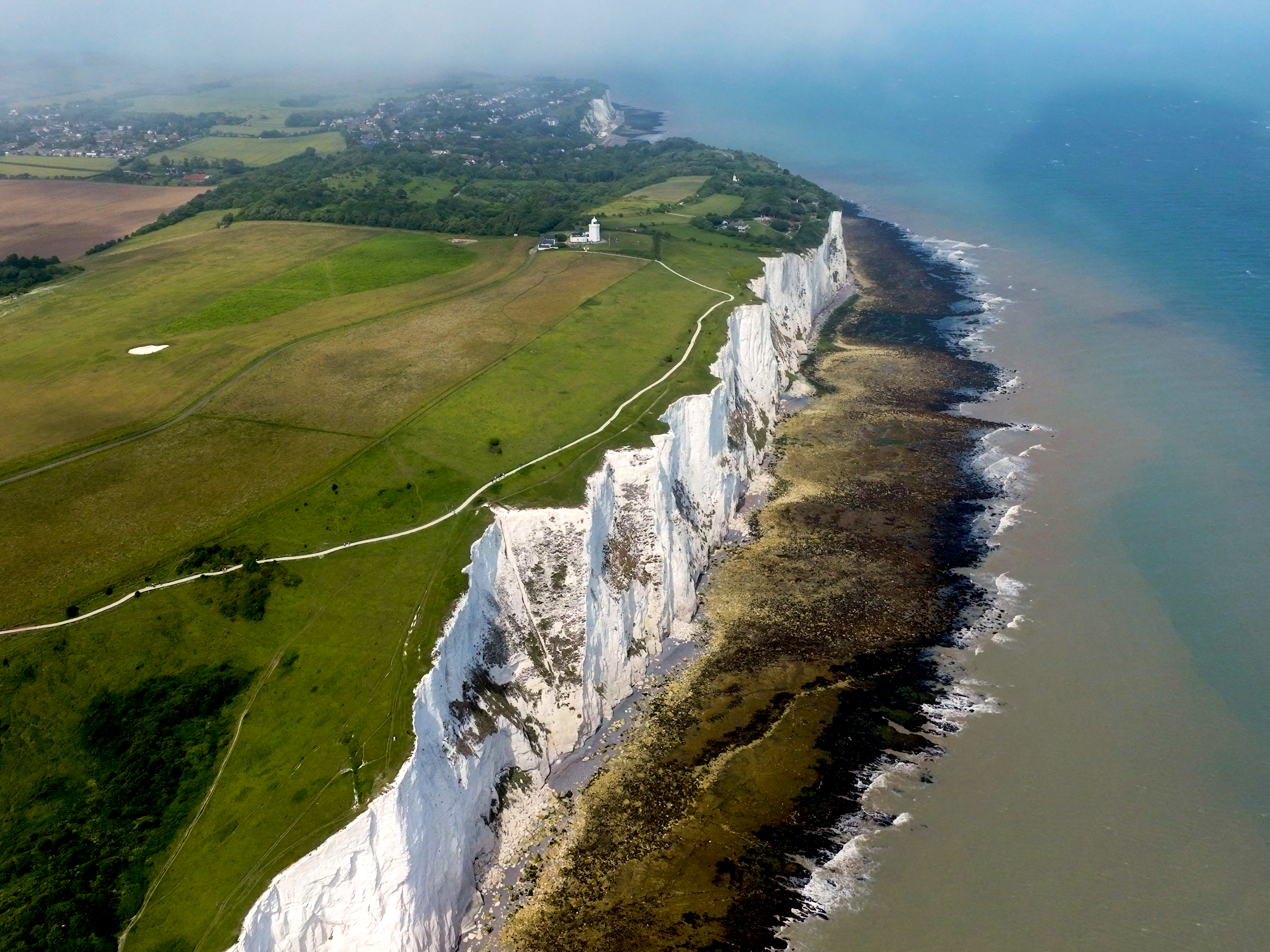
From London, the ship sailed overnight, and by morning we were in Dover. There are places in the world that stop you completely. The White Cliffs of Dover is one of them.
We had a free morning before our afternoon excursion, so we took a taxi to the National Trust site at the top of the cliffs. I had seen them on television many times. Standing on them is something else entirely, the green grass, the white chalk path, the sea breeze, the sound of the waves somewhere far below. No screen prepares you for the scale of it, or the feeling.
These cliffs rise over a hundred metres above the English Channel, the closest point between Britain and continental Europe, just twenty one miles of open water to France. For centuries they served as a natural defensive barrier, and during World War II, thousands of soldiers were evacuated from the beaches of Dunkirk across this very stretch of water. For those soldiers, seeing those white walls rising through the mist meant one thing. They had survived.
We walked an hour along the clifftop to the South Foreland Lighthouse, where in 1899 Marconi received the world's first international radio transmission, sent across the Channel from France. Then our Uber could not find us, the signal was unstable near the cliffs, and with the help of some very kind locals we walked down to St Margaret's Bay to get our ride back. Unplanned, slightly chaotic, and one of my favourite moments of the trip.
Only because of the port talk the night before did we know to come here in the morning. It was mentioned that because of the ship's route, Dover would be reached before sunrise, and the cliffs would be in the dark. The port talk, whether you attend it in person at the Star Theatre or watch it on Viking TV in your stateroom, is one of the most valuable things you can do each day. It walks you through what to expect at the next destination, excursion details, local insights, and practical things to watch out for. Never miss it. And a small practical note: turn off data roaming near the cliffs, since Dover is twenty one miles from France and your phone may pick up French mobile networks.
Dublin: Jameson and an Unexpected Connection
In Dublin, we visited the Jameson Distillery on Bow Street. Founded in 1780, Jameson Irish Whiskey has survived wars, famines, economic collapse, and a century of changing tastes. On every bottle, two Latin words, Sine Metu, without fear. The Jameson family earned that motto in the 1500s when they drove off pirates attacking villages along the coast. John Jameson carried it with him when he left Scotland and moved to Dublin to build his distillery.
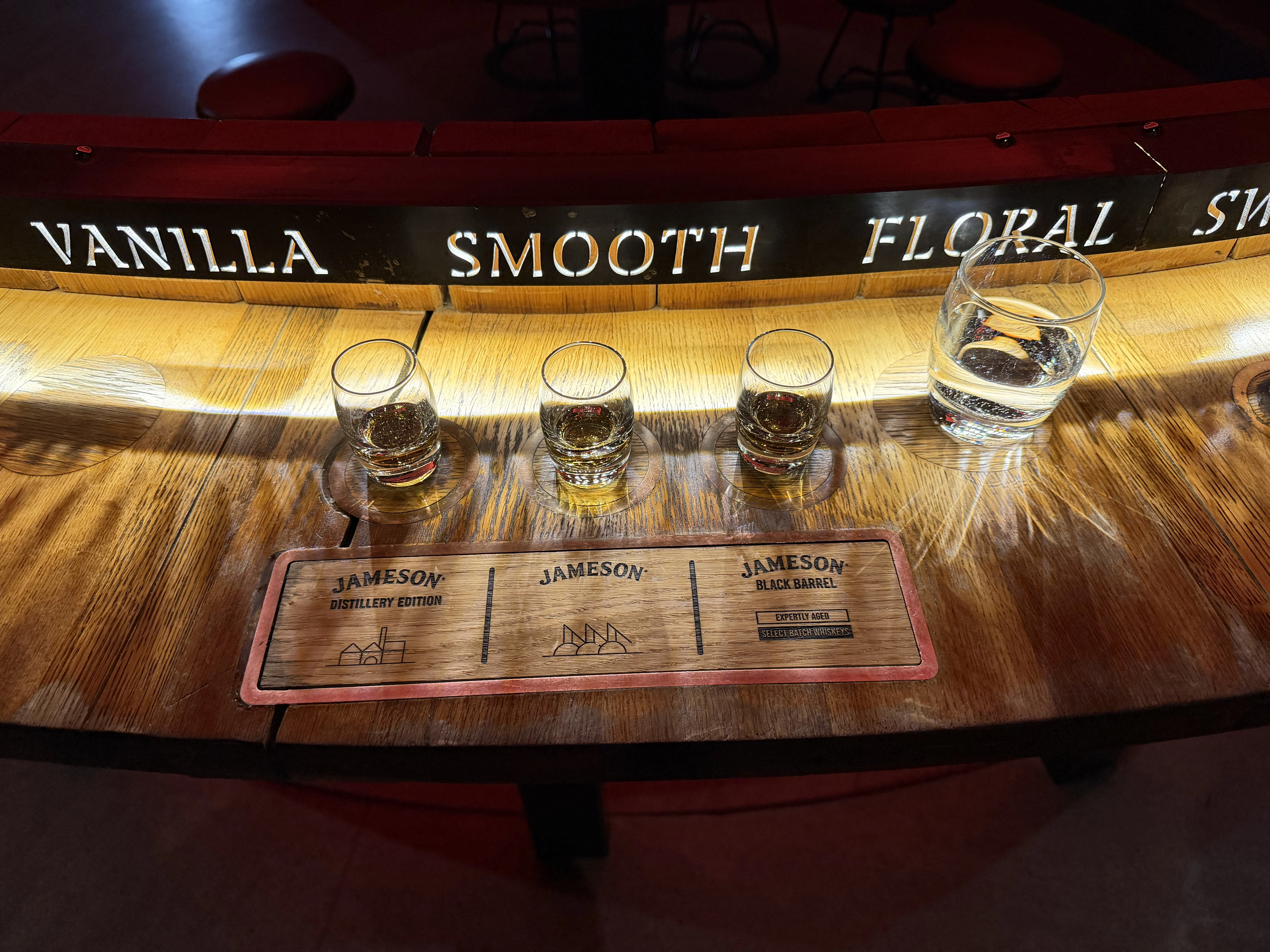
The experience begins with a film projected from above down onto the centre table, telling the story of Jameson in light and sound before you even reach the first barrel. From there, the guide walks you through the grain to glass process, how barley is malted, how triple distillation (Jameson's signature since 1780) creates a smoothness that sets Irish whiskey apart, and how time in bourbon and sherry casks builds depth and character.
Then the tasting. Three expressions side by side, Jameson Original, Black Barrel, and the Distillery Edition, available only here at Bow Street. Before a drop touches your lips, you learn to read the whiskey through colour and nose. The differences are immediate and surprising.
Here is the connection that stopped me completely. John Jameson's great grandson was Guglielmo Marconi, the inventor of the radio, the same Marconi whose first international transmission was received at the South Foreland Lighthouse, which we had visited the day before in Dover. History has a way of connecting itself.
Dublin is a tender port, meaning the ship anchors offshore and smaller boats bring you to the dock, with a complimentary shuttle bus taking you into the city centre from there. Whether you are on an independent tour or a Viking guided excursion, always take a picture of the shuttle bus schedule before you head out. It is one simple habit that lets you plan your day with complete confidence.
Liverpool: More Than the Beatles
Liverpool, the city that gave the world the Beatles, or so I thought. We booked the Beatles Famous Walking Tour as an independent excursion, and our guide was Mike Haskins, a writer who has published more than sixty books, including one dedicated entirely to the Beatles' Liverpool. His knowledge is not just deep, it is alive.
At the entrance of the Liverpool Beatles Museum, six names are written across the doors, Pete, Ringo, John, Paul, George, and Stuart. The Beatles did not start as four. Pete Best was the original drummer, and Stuart Sutcliffe was the original bassist, both gone before Beatlemania began.
Then the Cavern Club, where the Beatles played almost three hundred times. But one ordinary afternoon in 1961 became the most important of all, when a local record shop owner named Brian Epstein walked down those stairs out of curiosity. He left as their manager. One visit, everything changed. The surprises kept coming too, since the Rolling Stones played here, and so did Queen, Elton John, and Adele.
Then, on the wall outside, something I never expected, a plaque connecting Liverpool to Mississippi. The blues that inspired the Beatles travelled across an ocean before it ever reached this street. Mike stopped us at the Wall of Fame, gold discs, one for every Liverpool number one, dozens of names, most of them I had never heard.
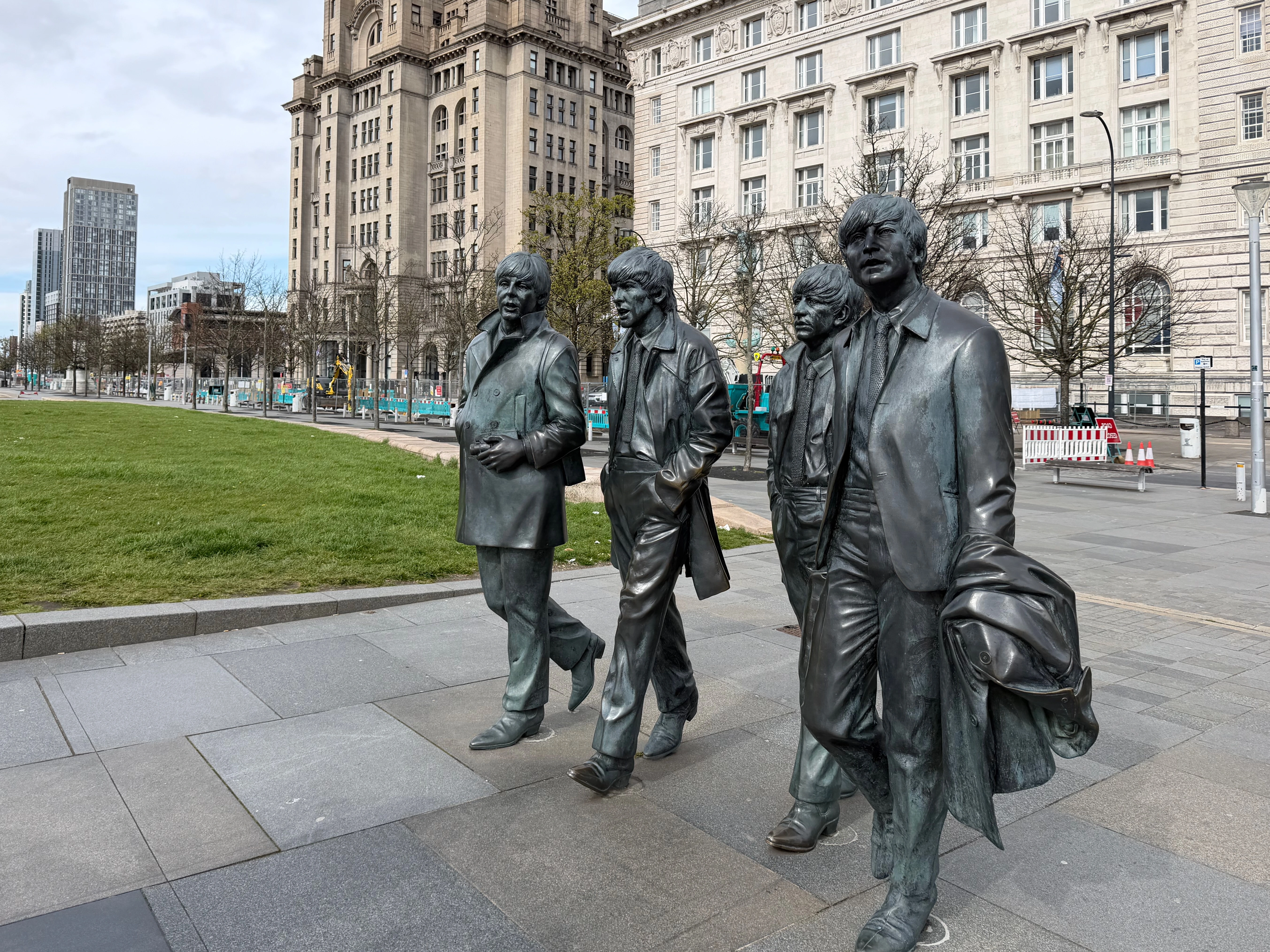
The tour ends at the waterfront, four bronze figures walking together, the Royal Liver Building rising behind them, and our ship just a short walk away. Sometimes you may not be able to join a Viking excursion because it is sold out, or the schedule does not align with your plans. One workaround is to book an independent excursion with a local guide, ideally a day or two in advance. You can find the ship's location, back on board time, and contact information in the Viking Daily. Be sure to return to the ship on time.
Holyhead, Wales, a place most people pass through on the way to the ferry to Ireland. What they miss is extraordinary. It sits on the Isle of Anglesey, an island with its own ancient language, its own identity, and its own extraordinary producers.
Our first stop was Bragdy Cybi, a micro brewery founded by husband and wife Dan and Bethan. They began brewing in March 2020, and then COVID hit. That alone tells you something about the spirit of these people. The brewery is named after St Cybi, a sixth century saint who founded a monastery within the ancient Roman fort right here in Holyhead. Bragdy is simply the Welsh word for brewery.
The brewery logo shows a bearded face, and naturally everyone assumes it is Dan. We did too. But Dan had no beard when the logo was created. That beard is actually a hops flower. Nobody saw that coming. Then the beers. Three of them, and the dark one stopped us all, called Môrish, a clever Welsh play on the word môr, which means sea. Rich, complex, deeply satisfying, with a secret ingredient of Welsh seaweed. You cannot taste it, but it gives the beer a savoury depth unlike anything else.
Alongside the beers, Dan served Welsh cakes with butter, Patagonia black cake, and a locally produced cheddar that was honestly one of the finest cheeses I have ever tasted. He shared not just his beer, he shared his language, his culture, his pride, and that generosity of spirit is something you cannot manufacture.
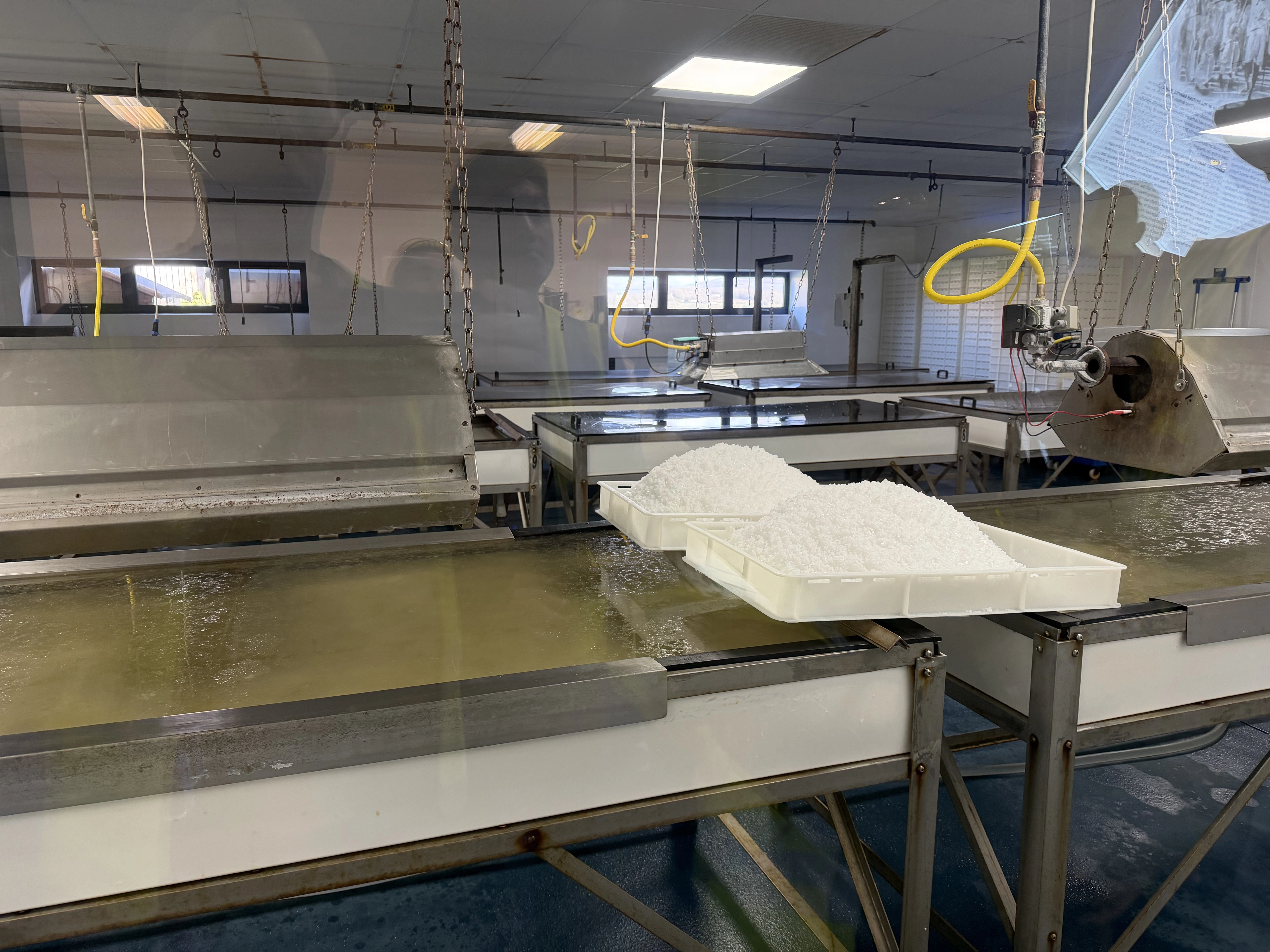
Then we visited Halen Môn, the Anglesey sea salt factory. Table salt, the kind most of us use every day, contains anti-caking agents that affect its purity and taste. Traditional European sea salts are more natural, but many pick up clay from the evaporation ponds where they are produced, and most producers skip one important step, removing the calcium carbonate that becomes trapped in the crystals, which is what causes the bitter aftertaste you sometimes notice. Halen Môn does things differently. The seawater comes from the exceptionally pure Menai Strait, filtered naturally through a mussel bed and sandbank before it ever reaches the factory. In 2014 it became the first Welsh product to receive Protected Designation of Origin status, and it has been served at royal weddings, at the Olympics, and in the kitchens of the world's most celebrated chefs.
Some people worry that ocean cruising does not give you enough time at each port to truly experience the culture. But a well designed cruise does not try to show you everything. Think of each port as a sampler. The best voyages leave you with a list of reasons to go back, and that is not a limitation, that is the beauty of ocean cruising.
Belfast: The Giant's Causeway
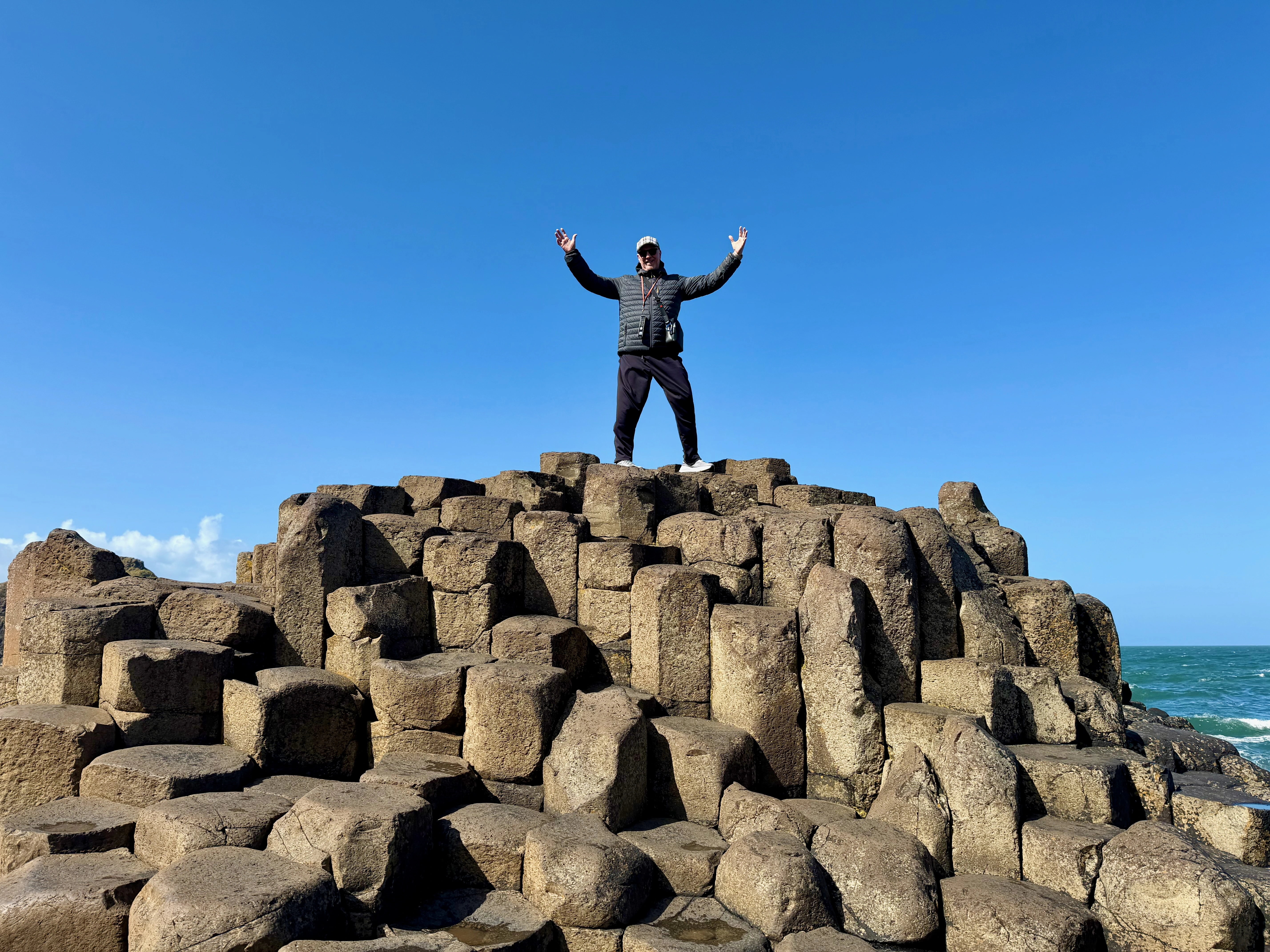
At Belfast, our excursion took us to the Giant's Causeway, Northern Ireland's only UNESCO World Heritage Site, and nothing prepares you for it. Forty thousand interlocking basalt columns rise from the sea. About sixty million years ago, a vast lake of molten lava cooled here so slowly and evenly that as it contracted, it cracked into hexagons, nature's most efficient way to divide a surface into equal cells with minimal boundary, the same shape and the same reason that honeycombs form.
Most columns are hexagonal, ranging from a few centimetres to twelve metres tall, fitting together so precisely they look engineered. Walking among them with the North Atlantic crashing around you, the scale of it becomes real, sixty million years standing right under your feet. Legend says an Irish giant named Finn MacCool built this causeway to challenge a Scottish rival across the sea. Whether you believe the geology or the legend, both leave you standing there in silence.
Consider the excursion labels before you book. Viking shore excursions are labelled with excursion type, activity level, features, and what is included, and the Giant's Causeway was marked as moderate activity level. In my opinion, if you choose to climb on the rocks and walk close to the sea, it can be physically demanding, the surfaces are uneven, they can be slippery when wet, and the wind can be strong. Wear appropriate footwear and take your time.
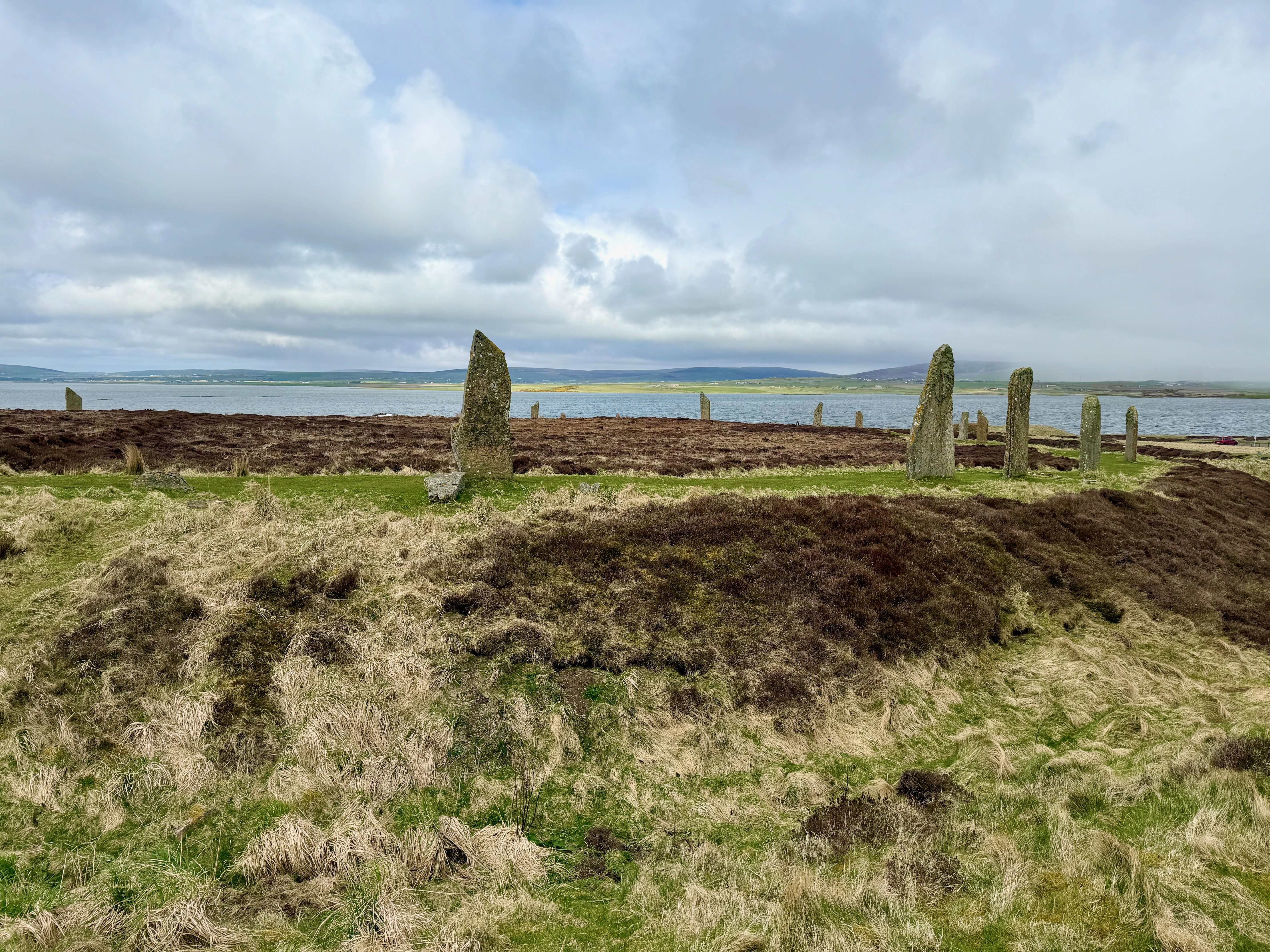
The Orkney Islands are one of the most ancient places on earth, and this stop surprised us in ways we never expected. Our excursion took us to the Ring of Brodgar, a perfect circle of ancient stones placed here between 2500 and 2000 BC. Nobody knows exactly why. No burial evidence, no confirmed astronomical alignment. Originally sixty stones, transported to this site by Neolithic communities working together, twenty seven remain today.
I wanted to get closer, to touch them. That is not allowed, and I accepted it, and it changed nothing. Standing at the edge of that circle, cloudy sky above, wind coming off the loch, I felt completely calm. A connection to people whose names we will never know, who stood in this same place and felt something we cannot fully translate.
Then, walking through Kirkwall, the capital of the Orkney Islands, I discovered Dr John Rae, born right here in Orkney in 1813. A surgeon, an explorer, and one of the most unjustly forgotten figures in Arctic history. For centuries, explorers believed there was a route through the Arctic connecting the Atlantic to the Pacific, but one crucial piece was missing. The problem was Victoria Strait, the water running along the western side of King William Island, choked with pack ice and impossible to navigate. Sir John Franklin tried to push through it in 1845 with two ships and one hundred and twenty nine men. None of them survived.
What nobody knew was that on the eastern side of King William Island, there was a narrow channel, protected from the pack ice by the island itself. That channel is Rae Strait, and it creates a navigable route that completely bypasses the deadly ice of Victoria Strait. Rae discovered it in 1854, and decades later the Norwegian explorer Roald Amundsen used Rae Strait to become the first person to successfully navigate the Northwest Passage. Dr John Rae is buried at St Magnus Cathedral, right here in Kirkwall, and his name lives on across the Canadian Arctic today, Rae Strait, Rae Isthmus, Rae River, and Mount Rae all named in his honour.
Scotland's climate is shaped by the Gulf Stream, that warm Atlantic current that keeps temperatures milder than you might expect at this latitude. Snow in the Highlands is rare, but the wind is relentless, making it feel colder than it is even in summer. A good windbreaker and dressing in layers is essential.
Edinburgh: Closes, a Bagpiper, and the Castle
Edinburgh. There is no city quite like it. Every corner is a story, and the city holds its history without making a museum of itself. We joined a walking tour through the Old Town, and the layers came one after another.
Look down at the cobblestones near St Giles' Cathedral and you find the Heart of Midlothian, a heart shaped mosaic marking the site of Edinburgh's Old Tolbooth prison. Local tradition says to spit on it for good luck. Look up at the wall nearby and a brass plate marks the site of the last public execution in Edinburgh, in 1864. Two details, one street, centuries in a single glance.
Through an archway into Riddle's Court on the Lawnmarket, and you are back in 1598, the year King James VI and Anne of Denmark dined at a royal banquet in this very courtyard, one of the oldest surviving closes in Edinburgh. For Outlander fans, step into Tweeddale Court. Today it is a peaceful hidden courtyard, home to a section of the King's Wall dating back to the fifteenth century. In Season 3, it was transformed into a busy eighteenth century marketplace, the scene where Claire accompanies Jamie shortly after their reunion.
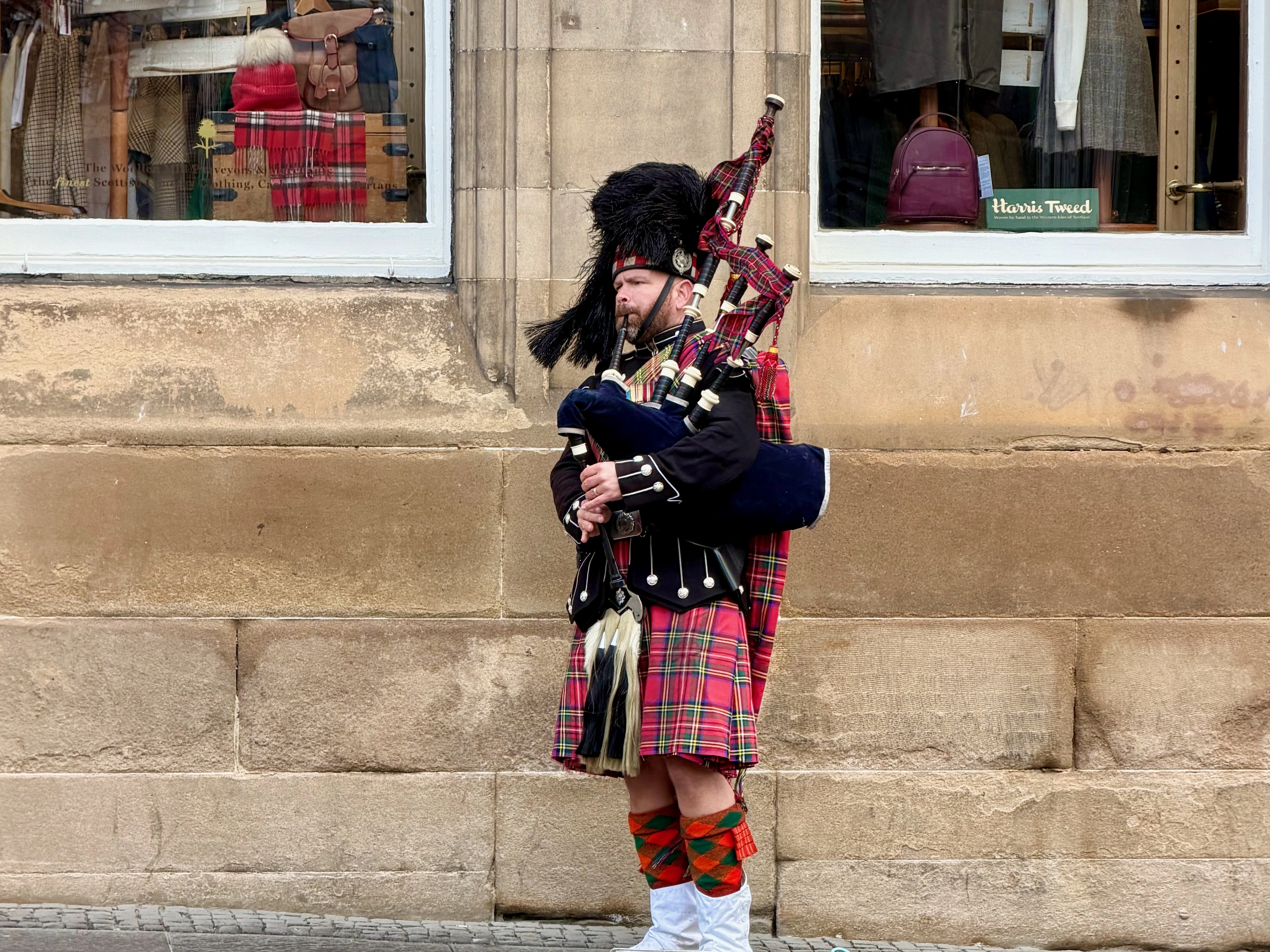
And then the bagpiper. Standing on the Royal Mile in full Highland dress, playing into the wind. The Great Highland Bagpipe was classified as an instrument of war in the UK until 1996. And above it all, Edinburgh Castle, crowning the skyline from its ancient volcanic rock, watching over this city for centuries.
For an itinerary this rich in culture, here is what I would recommend, research your destinations before you arrive. It sounds simple, but it makes all the difference. When you already know something about a place you connect differently. The difference between a tour and a journey is preparation.
Aberdeen: Dunnottar Castle
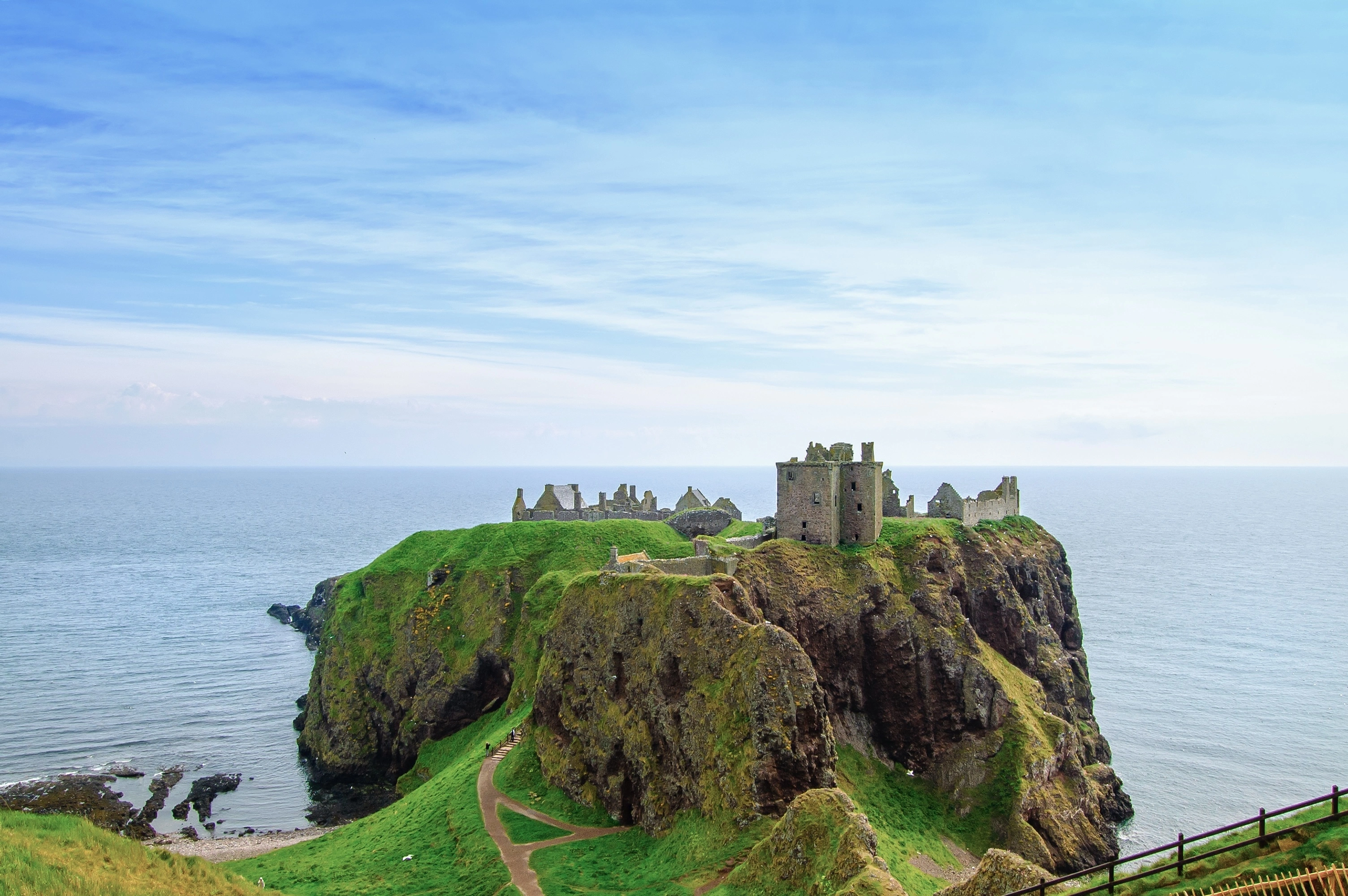
Aberdeen, the offshore oil capital of Europe. Our excursion took us to Dunnottar Castle. We began in Stonehaven, a quiet harbour town on the Aberdeenshire coast, then walked two miles along the clifftop above the North Sea, rolling green hills on one side, sheer cliffs dropping straight into the water on the other, sheep and cattle grazing under the sun.
Along the way, the Black Hill War Memorial, built after World War I, more names added after World War II, deliberately designed to look unfinished, to represent the unfinished lives of those who died for their country. Somewhere on that path, something settled in me.
And then the castle appeared. Fortified for over two thousand years. Vikings attacked it. William Wallace captured it. Mary Queen of Scots once stayed within these walls, and in 1652 it was the last place in Scotland still flying the royal flag, hiding Scotland's crown jewels from Cromwell's army until they could be smuggled to safety. Perched on a sheer rock above the North Sea, surrounded by water on three sides, the castle looks like something from a fairy tale. This is Scotland at its most raw and beautiful, and I will come back.
There are two times associated with every shore excursion. One is the Meets At time, shown on the Viking Daily, and the other is the departure time, shown on the Viking Voyager app. Always use the Meets At time to know when to gather at the designated area, since that gives you enough buffer to get prepared, because the excursion departs at the departure time, sharp. Also, if your excursion is marked QV, remember to bring your Quietvox with you. It will greatly enhance your experience, letting you hear your guide clearly wherever you are.
Shetland Islands: Ponies and a Profound Quiet
The Shetland Islands, the most remote stop of the entire voyage, closer to Norway than to London. From the moment the ship approached the harbour, the landscape told you immediately that you were somewhere unlike anywhere else. Rolling hills, dramatic cliffs above the Atlantic, wind turbines turning against a perfect blue sky, mussel farms sitting quietly in the still water below.
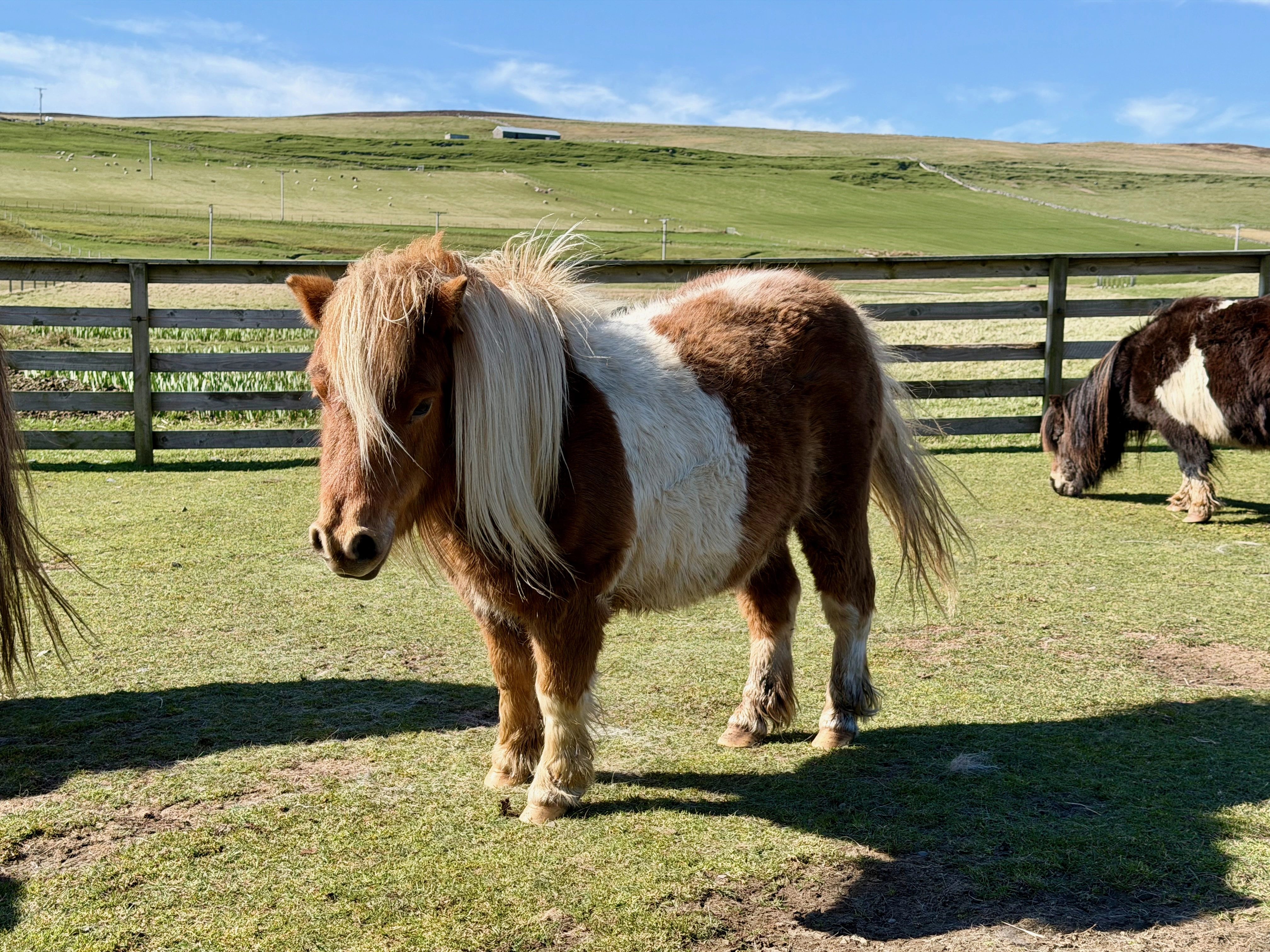
Shetland ponies have lived on these islands for over four thousand years, the smallest horse breed in Britain, no taller than forty two inches, and yet pound for pound the strongest equine on earth. In the nineteenth century, when a law was passed banning women and children from hauling coal in the mines, thousands of Shetland ponies were taken underground instead. They have double layered waterproof coats, they live into their thirties, and each one has an individual passport and is microchipped. Standing among them, I felt a joy that was completely uncomplicated, the kind of joy that travel gives back to you when you stop trying to find it.
We were looked after extraordinarily well by the officers and crew of the Viking Neptune throughout this journey. A few things we can all do to make their job easier and show our appreciation. Note the names of crew members who made a difference and mention them specifically on the review form, since that recognition matters deeply to their careers. If you notice something that could be improved, say so early, not on the last day when nothing can be done. And simply take a moment to say thank you, and call them by name. They work long hours far from their families, and that simple human gesture means more than you might think.
Bergen, Norway: Dale of Norway
Bergen, our final port, and what a beautiful city to end on. We had been here before on a previous Viking cruise, the Viking Homelands, and this time we chose the Dale of Norway factory excursion. If you have ever admired the beautiful patterned knitwear on Viking ships and wondered where it comes from, this is the answer.
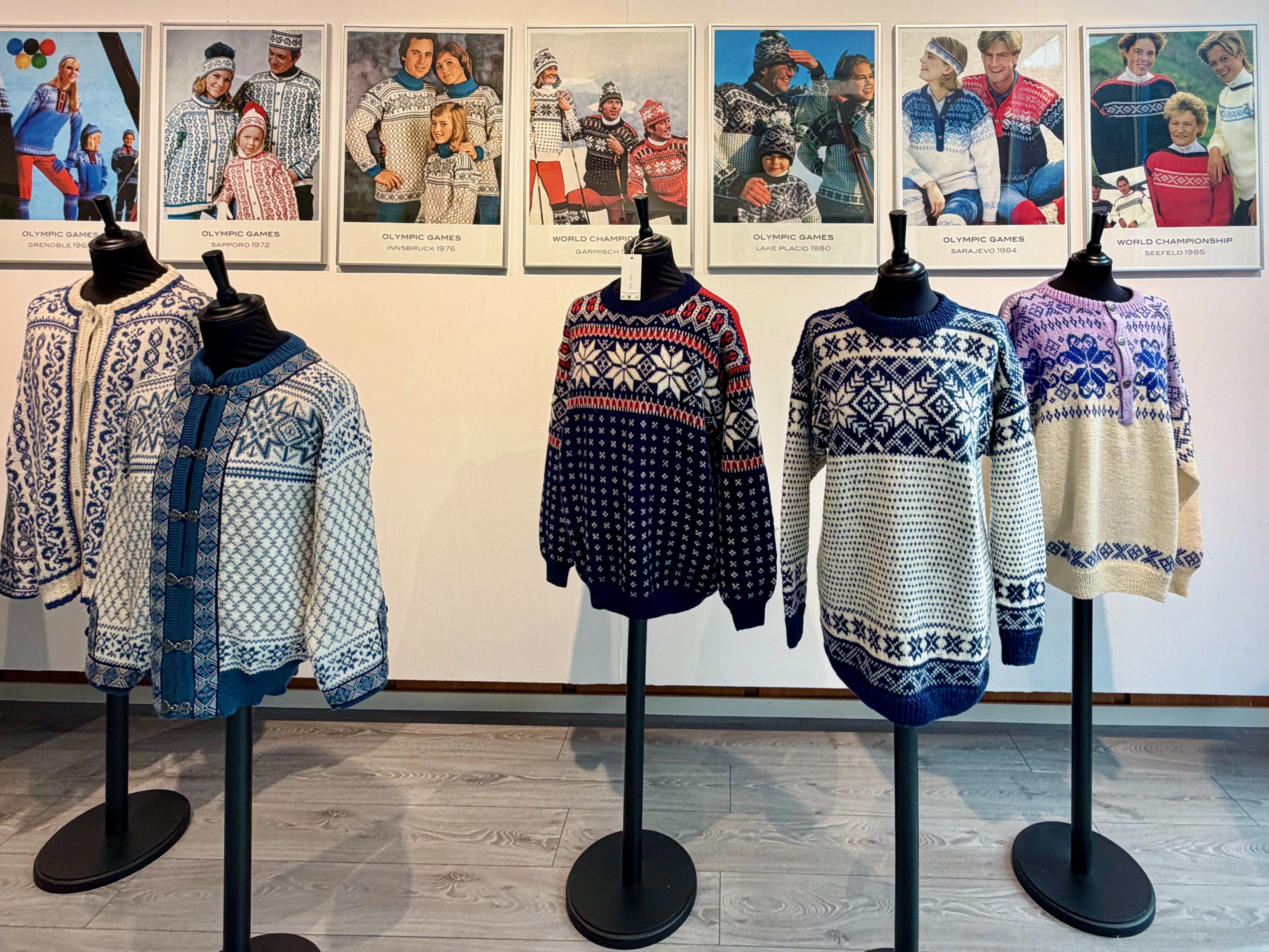
Dale of Norway has been in continuous production since 1879, over one hundred and forty years of unbroken craftsmanship, and the official Olympic knitwear outfitter since the 1956 Winter Olympics. The patterns you see on Viking ships were designed in partnership with Dale, drawing from nature and Norse heritage. Our guide had worked here for thirty years, and his pride in this place was visible in every word. Walking the factory floor, hearing the machinery, watching those hands at work, you understand immediately why these sweaters are what they are.
The store offers fifty to seventy percent discounts on selected items, and then, just as we settled back on the coach, the store staff came on board with gift bags for every passenger. Nobody expected that. Inside, a chocolate bar and a Garmisch hat, Dale of Norway's iconic merino wool beanie whose pattern is taken from their 1978 Garmisch World Ski Championships sweater. A piece of Norwegian craftsmanship worth around one hundred US dollars, given to every passenger without a word of fanfare.
Travelling with Viking is not just about the excursions. The ship itself is a destination, full of experiences you cannot find on shore. The Bayeux Tapestry tour with the onboard historian, the engine room tour, the galley tour, and the Kitchen Table cooking class, preparing an entire dinner with the chef, building friendships over three courses and wine pairing. Curious to what drinks are included on a Viking Ocean Cruise? Some of the most memorable moments of this voyage happened without ever leaving the ship. And this is why I love Viking and other cruise lines - for what they offer onboard.
Looking Back
That is the highlights of an incredible journey, though there are so many other precious moments that happen each day, waiting for you to discover on your own. If this voyage is calling you, I would love to help you plan it. Reach out any time, and let's talk about whether the British Isles Explorer is the right fit for your own next journey.
Ken Graham, Luxury River/Ocean/Expedition Cruise Specialist