Ten river cruises in, I have seen almost everything go right, and this July I saw what happens when Europe's weather does not cooperate. Here is my honest, practical picture of river cruising, using my own recent Rhine experience so you can book with your eyes open and enjoy the trip even more.
Why I am writing this
I have sailed on the Rhine, the Danube, the Douro, the Main River and Canal, and the Rhone, and in almost every case the actual experience has matched what I promised my clients.
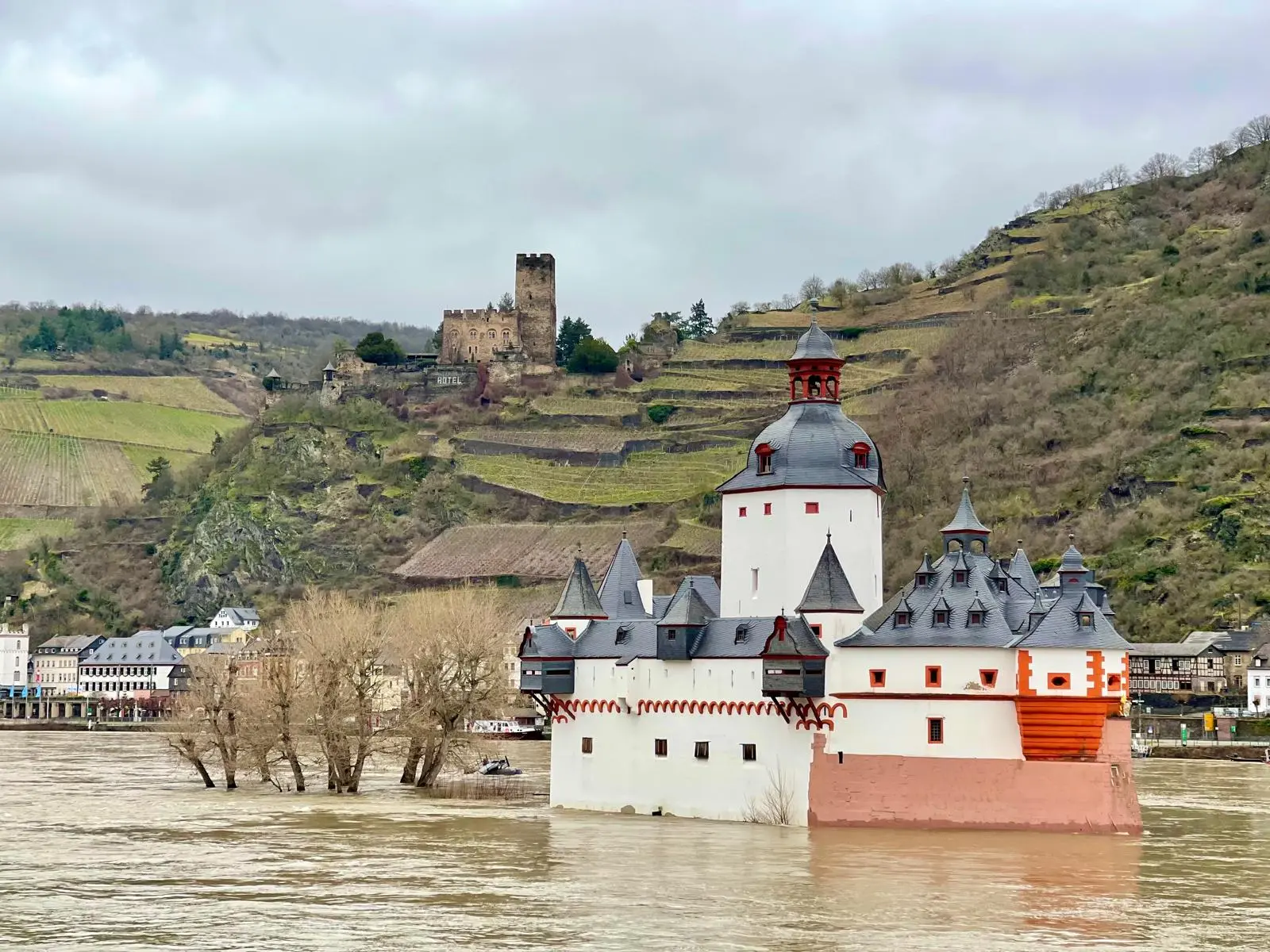
I have now personally experienced both high and low water levels on the Rhine River.The high levels were in December of 2023 due to heavy rainfall across the river’s catchment areas combined with a sudden rise in temperatures that melted accumulated regional snow.Did this impact us negatively? Yes and no. We sailed our full itinerary, but we could not dock at some of the traditional berths because they were flooded.What did that mean?It meant that we could not walk off the ship to Cologne’s city centre and instead we were docked 20 minutes away and bussed to the Cologne city centre.Additionally the sun deck was often closed as some of the bridges were so low for us to pass, the Captain would not allow anyone on the sundeck for basic sightseeing and picture taking.This was a Viking River Cruise, and overall the crew, Captain, and Cruise Manager handled it well. We saw everything we expected, but walk off docking was replaced with shuttle buses, and in some cases a longer ride to our excursions.
November 2023- Pfalzgrafenstein Castle located on Falkenau Island in the middle of the Rhine River near Kaub, Germany. This is high water - see below for the same scene in low water.
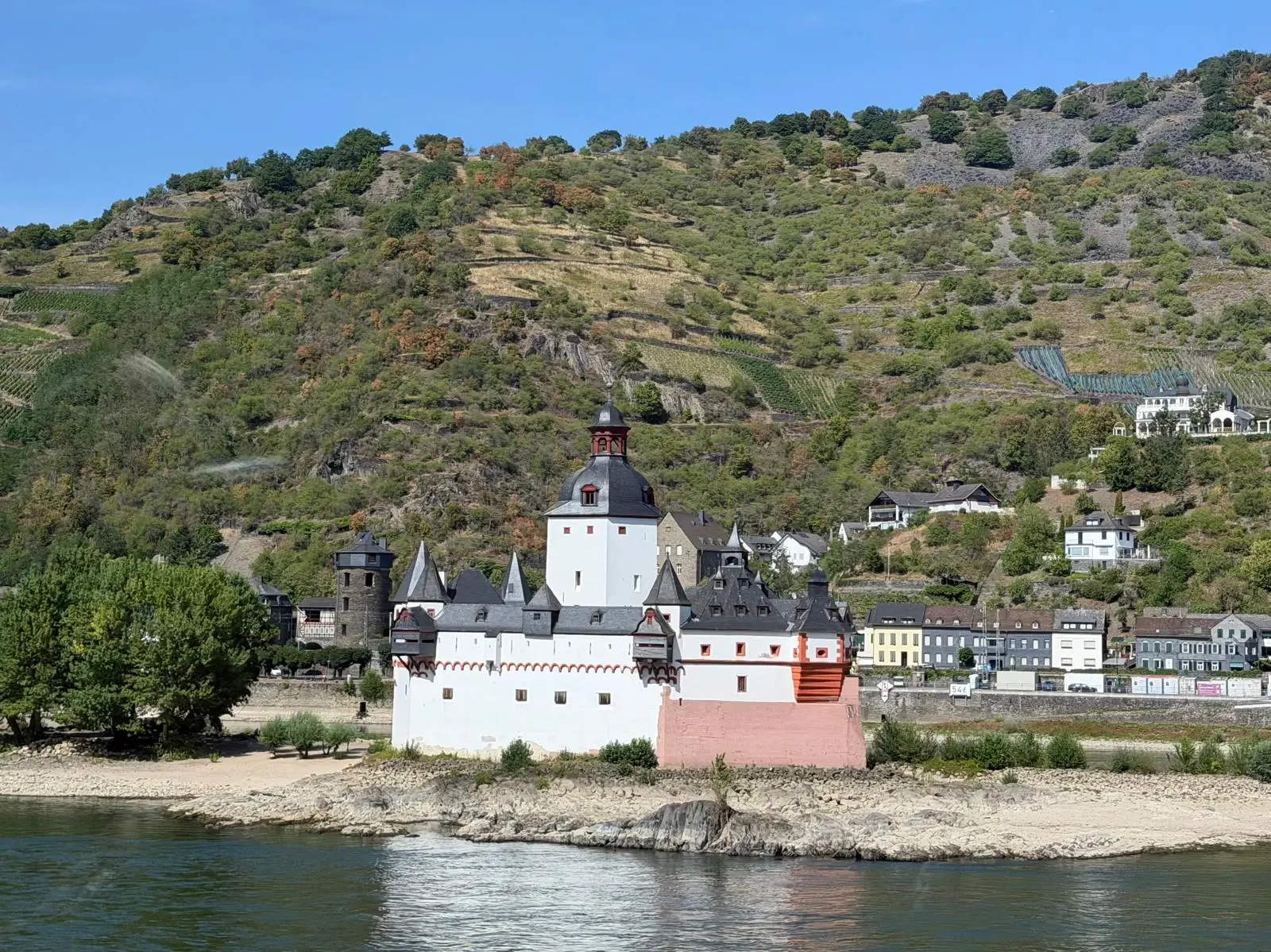
In July 2026, on a Swiss Alps and Rhine Castles itinerary with AmaWaterways, I experienced Europe's drought which pushed the Middle Rhine to levels where our ship simply could not sail the planned stretch between Strasbourg and Koblenz. Instead of a leisurely afternoon and evening cruising past the castles of the Rhine Gorge, we were bussed to Heidelberg for a visit, transferred by coach to St Goar, and boarded a day boat for the scenic portion through the Gorge itself, before coaching again into Koblenz to board a different ship, the AmaVenita, to continue the journey. Even that day boat could not sail its full normal route because of how low the water had dropped, and we later learned we had been on its last sailing, and that the following day, that same boat was to be pulled from service entirely until water levels recovered.
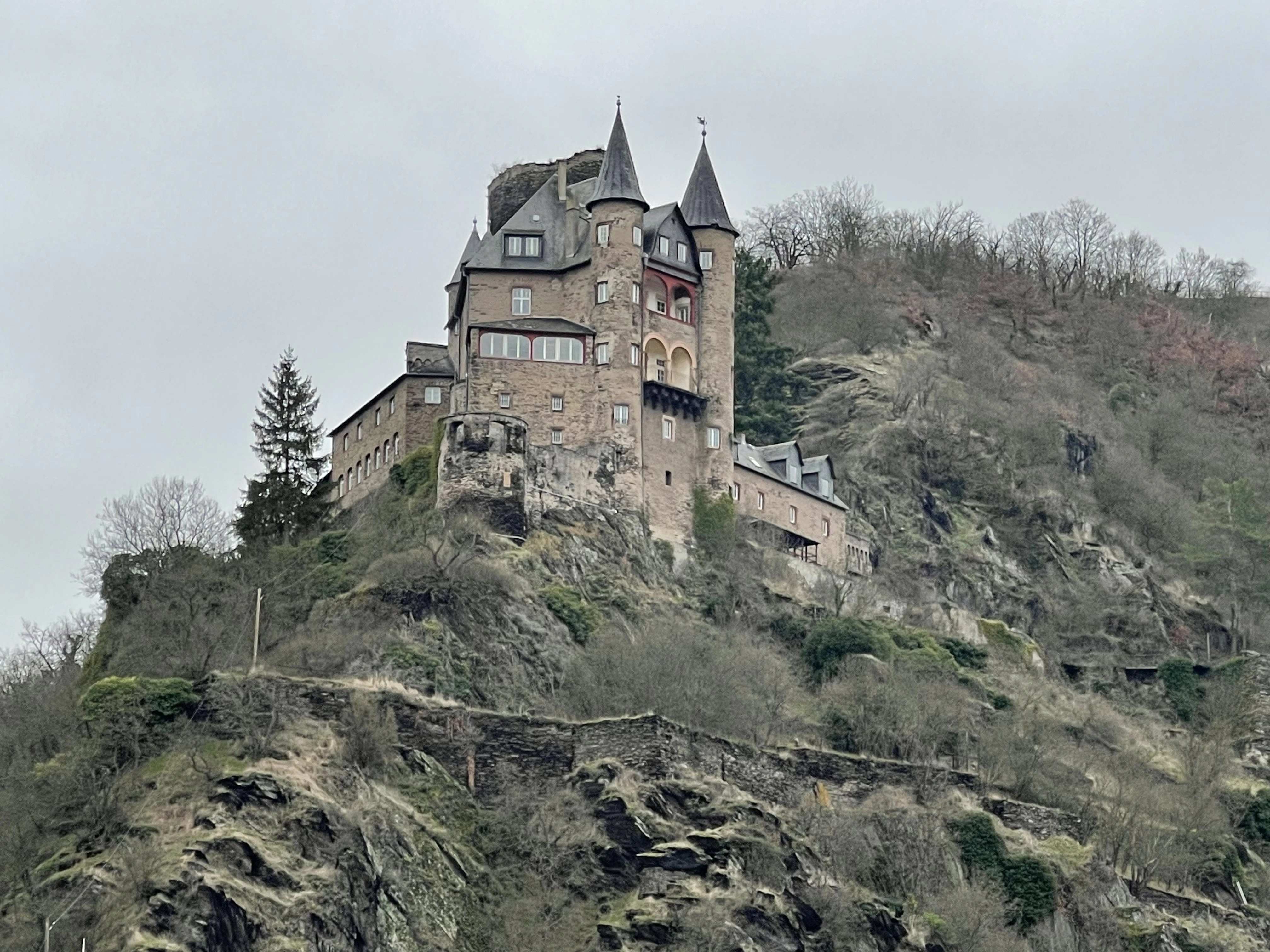
July 2026 - Pfalzgrafenstein Castle located on Falkenau Island in the middle of the Rhine River near Kaub, Germany. This is low water - see below for the same scene in low water.
In our high-water experience we still saw everything expected, but in this July 2026 Rhine River sailing we did not get to see the iconic Middle Rhine and the Castles that line the waterway.
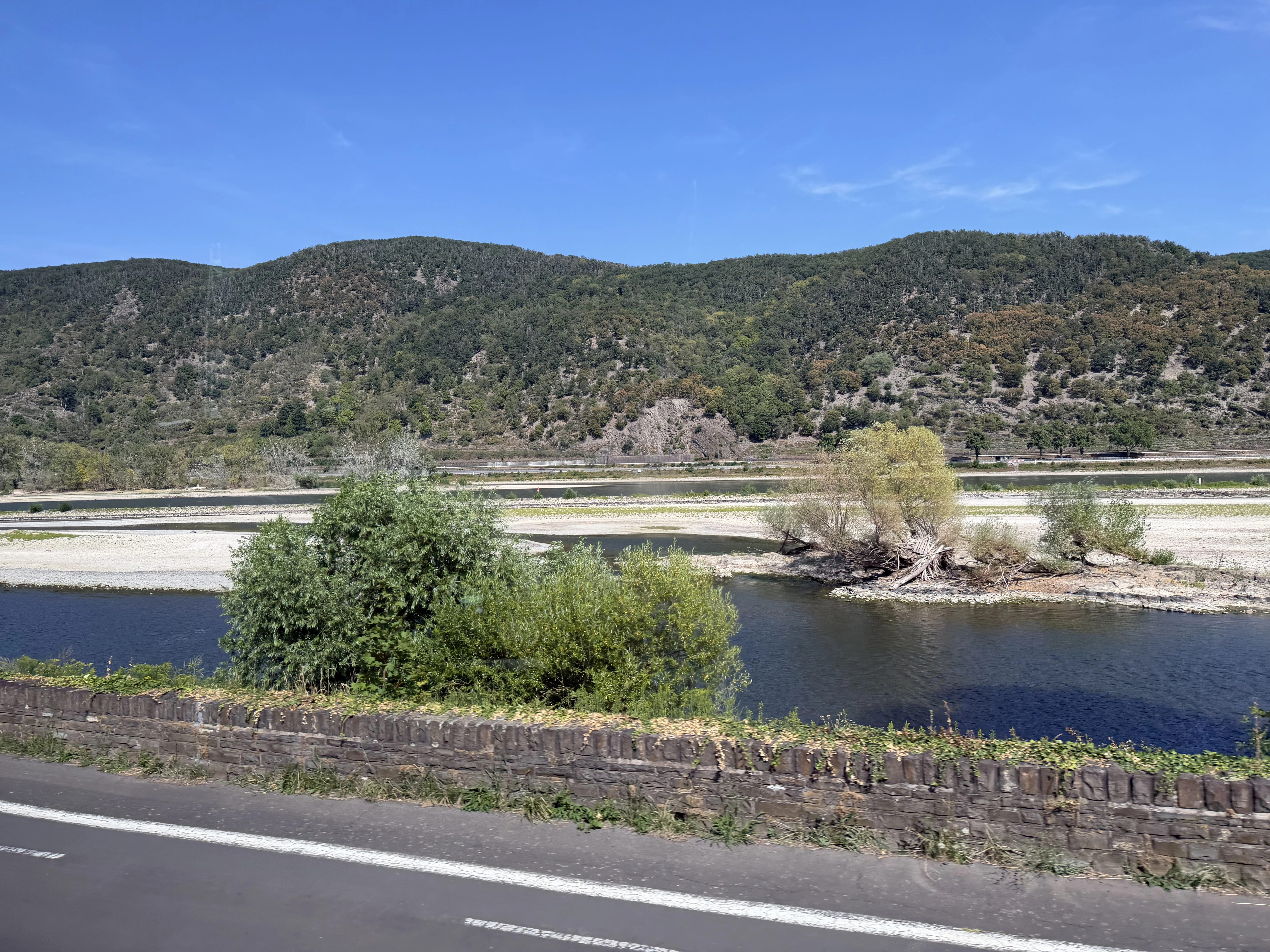
Along that stretch of the Rhine, we noticed what looked like wide sandy beaches lining the banks. They were not beaches at all. What we were looking at was the exposed river bed itself, normally well underwater, laid bare by how far the level had dropped. It was a striking, slightly sobering visual for just how significant the drought had become.
Nobody was left behind, nobody missed a night's sleep, and we still saw the Loreley Rock and some of the castle studded Gorge from the water. The scenic sailing that I have done in the past in this section of the Rhine is beautiful and some guests that came more specifically for this experience did miss out.
I LOVE river cruising. I encourage my family, friends, and clients to river cruise, but you must know that there are some realities of river cruising that in my opinion you must know and accept. We can no longer predict weather patterns and when water levels will be high or low. We have to take it as it comes.
Beyond having sailed the Rhine and Danube before, and beyond being a Travel Advisor who takes this seriously when booking clients, I was genuinely surprised by how many fellow guests on this cruise had never considered that this kind of situation and possible alteration to the itinerary was even possible, and a fair number felt they were owed compensation for it. That reaction told me there is a real gap in what people expect from river cruising versus what the cruise lines promise. This article is my attempt to close that gap, not just for this itinerary, but for river cruising in general.
The cruise lines do tell you what you need to know in the cruise contract, but who reads that? In my opinion, no compensation is owed when alterations to the itinerary are made due to high or low water levels. This is about expectations, and understanding what is in the control of the cruise line and what is not.
Low water, high water, and the fine print
River cruising depends on rivers, and rivers depend on rainfall. Every river cruise contract you sign includes language giving the cruise line the right to alter, substitute, or reverse the itinerary due to water levels, navigational conditions, or circumstances beyond their control. You will see a version of this same line printed on the daily programme every single day of the cruise itself, something like "cruise schedule is subject to change due to navigational conditions beyond our control."
This is not fine print designed to trap you. It is an operational reality that every river cruise line, from the most affordable to the most luxurious, has written into their terms because rivers occasionally will not cooperate no matter how well run the ship is. When low water strikes, cruise lines generally have a playbook: bus transfers between ports, a shortened sailing on a day boat through the most scenic section, and in more serious cases, a full ship swap so your holiday continues on schedule even if a stretch of river will not carry a hull that week.
We cannot hold a river cruise line responsible for a water level that is not in their control, any more than we would hold an airline responsible for a flight grounded by extreme weather.
Compensation, when it happens, is entirely at the cruise line's discretion and is not something the contract obligates them to provide for weather related itinerary changes. I say this not to be a killjoy, but because managing this expectation before you sail means you spend your time in Heidelberg enjoying the castle and the Philosopher's Path rather than at the front desk arguing a point the contract has already settled.You accepted those terms when you paid your deposit and your final payment, and not having read them does not change that.
This will not be a popular addition to this article, but I feel it is necessary to add. What if you have travel cancellation/interruption insurance? Will that policy cover you if you are learning that high or low water levels are significantly impacting your river cruise? Generally no. Trip cancellation and interruption insurance is built to cover unexpected events that force you to cancel before departure or cut a trip short after it begins, such as illness, injury, or a family emergency. A cruise line adjusting or shortening part of an itinerary because of high or low water, while the cruise itself still goes ahead as booked, typically does not meet the definition of a covered cancellation or interruption, since you are still travelling and the trip is still happening. Cancel for any reason policies work differently, but even those generally only apply if you cancel before departure, not to changes made once you are already sailing.
AmaWaterways for instance, does offer a cancellation package that protects you to cancel for any reason up to 31 days before departure, and that gives you a voucher for any non-refundable fare good for 2-years. This is a very affordable option, but it does not give you any coverage in the final 30-days before sailing. This is not however offered by every cruise line, and if it is, it generally must be purchased at the point of placing your deposit.
The one bit of advice I have regarding travel insurance is, that you cannot and should not think that it covers every aspect that can impact your travels. Travel cancellation and interruption insurance is different from every insurance company, but the reasons for cancellation are always very clearly broken down.
The lesson for river cruising generally, not just these examples: ask your travel advisor what happens if the river cannot be sailed, and know the answer before you go.
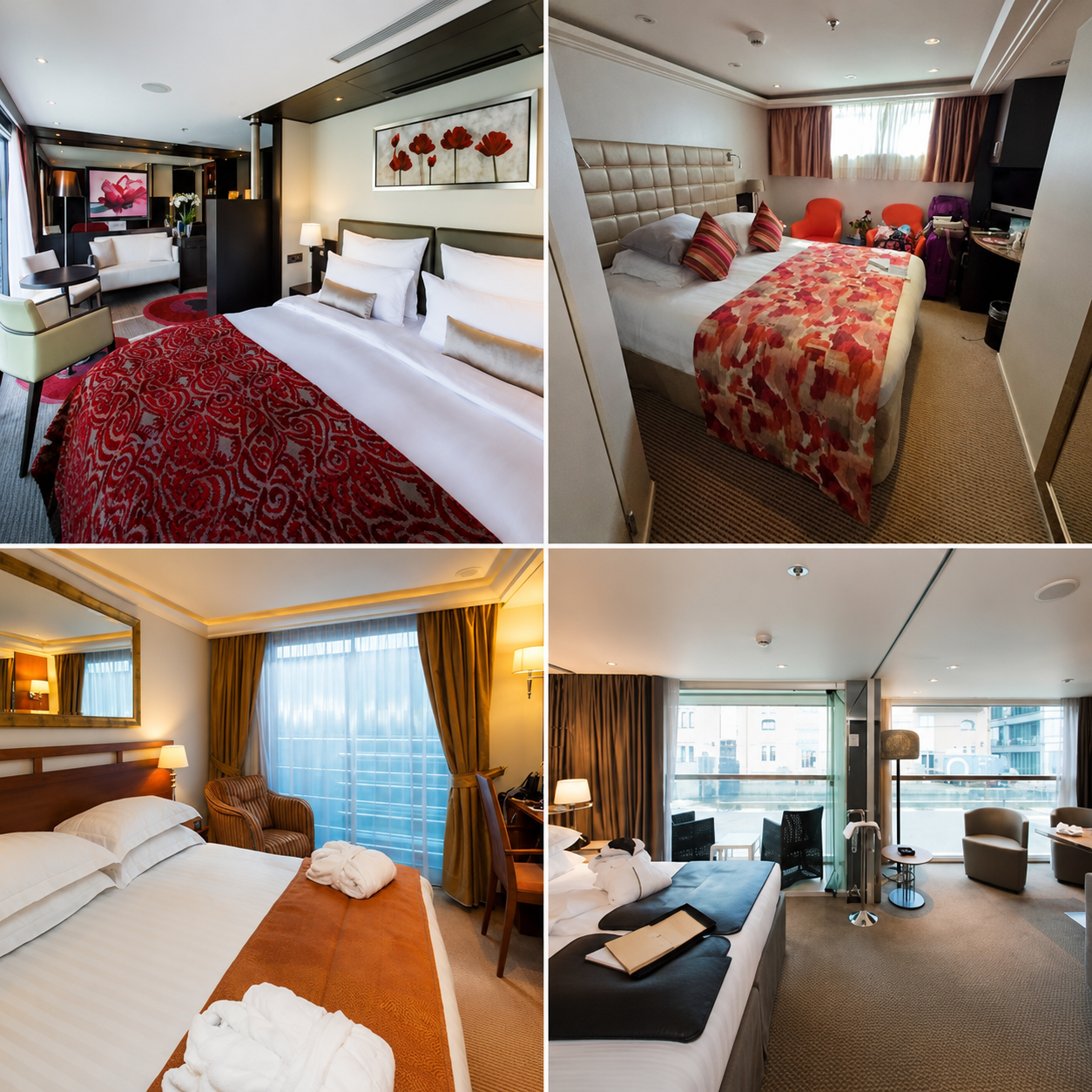
Choosing your cabin: fixed window, French balcony, or full balcony
River ships offer three broad cabin styles, and the difference matters more than people expect.I explain this to every client, but the reality does not always land until you are onboard for the first time.
None of this is meant to scare you away from river cruising, only to help you go in with the right expectations. It remains an amazing way to see Europe and beyond.
A fixed window cabin on a river ship is the entry level or lead in cabin category. Typically, it means one or two smaller windows positioned just above the waterline. There is no sitting and watching the scenery drift by from a chair in this category, the windows sit too high and are too small for that. You can look out if you are standing at the window, but that is the extent of it. This category suits guests who do not plan to spend much time in their cabin, since it is genuinely just a place to sleep and store your things, and the best value on the ship. This is the category of cabin that I book after having been on 10 river cruises.
A French balcony is a cabin with floor to ceiling glass doors that open inward, giving you fresh air and an unobstructed view without any usable outdoor space to step onto.
A full balcony gives you an actual outdoor terrace, sometimes with a table and chairs, where you can sit outside.
Here is what many first-time river cruisers do not realize. Most river cruises in Europe sail overnight, while you sleep, and dock during the day so you can go ashore. That means your balcony time is often more limited than the brochure photos suggest, since you are usually out touring during daylight hours and cruising after dark.
There is also the question of what your balcony actually faces once you are docked. River ports are tight, and ships frequently raft together, meaning your ship ties up alongside another vessel rather than directly at the quay. Depending on how busy the port is, you could be rafted two ships across, or even three, with your ship in the middle. If your cabin is on the side facing the other ship, your view and your balcony privacy disappear entirely for that stop. If you are docked directly at the quay rather than rafted, you may instead find your balcony faces a busy walkway with guests, crew, and passersby moving along it all day. Neither scenario is a flaw in the ship, it is simply the nature of river docking, and it is worth discussing with your advisor before you pay a premium for a balcony category.
Where you actually dock
Cruise brochures show you glossy photos of city centres, and sometimes that is exactly where you will be. Other times, your ship will dock some distance away, in an industrial port area or a quay well outside the historic centre and getting into town means a shuttle bus or a longer walk than you pictured.
Basel, Strasbourg, and Cologne are good examples of cities where docking locations can vary from sailing to sailing, sometimes landing you a short stroll from the old town, other times requiring a coach transfer. This is worth asking about specifically for the itinerary and departure date you are considering, since it can shift year to year and even week to week depending on which berth is available.
Even asking your Travel Advisor will not guarantee the final docking location, since this can change at any time and the exact berth may not be known in advance. I have been to Cologne three times, and only once did we dock right at the quay beside the city centre.
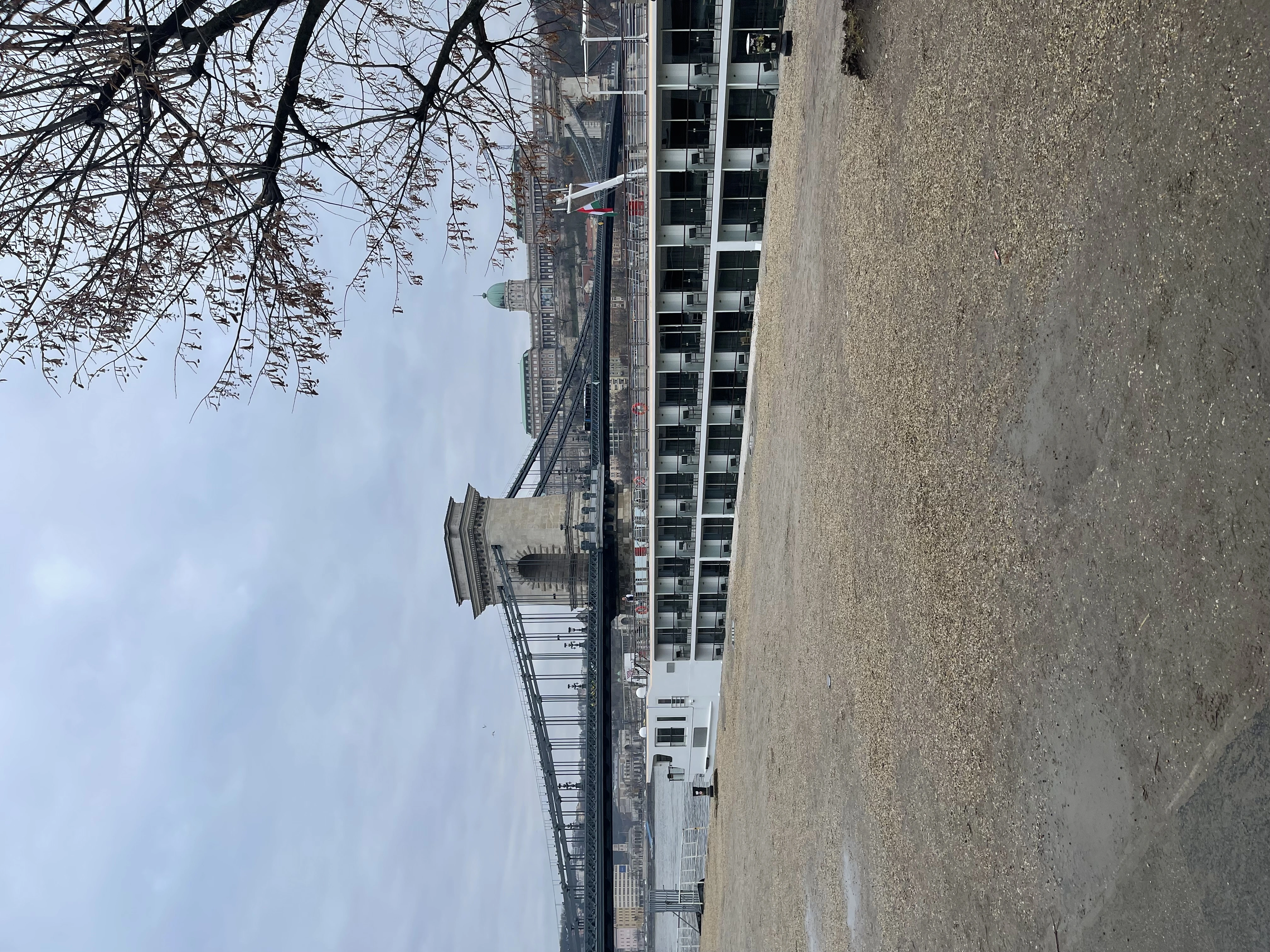
This is an example of a docking location in Budapest that you can walk off the ship and into the city.
Not everything is a stroll away
River cruise itineraries are built around included excursions, and it is easy to assume every stop involves simply walking off the ship into a postcard old town. In practice, many of the sites people most want to see, hilltop castles, monasteries, vineyards, or a UNESCO cathedral in a neighbouring city, require a coach ride of thirty minutes to two hours before the walking tour even begins. A cruise stop such as visiting Cologne while docked in Düsseldorf, or reaching Rüdesheim from a Rhine mooring further downstream, are typical examples of this pattern.
Even docking in Budapest, you will most commonly dock on the Pest side and if you want to visit the Fisherman’s Bastion, or the famous Matthias Church on the Buda side, this will be a significant hike/walk or a bus ride to get to it.
None of this is a bad thing, the coach is usually comfortable, and the destinations are worth the ride, but it is worth knowing in advance if you are hoping for a cruise where every excursion begins by simply stepping off the gangway.
The reality is that each city that you dock in may have some interest to you, but for us, since we have been to several of these cities again, and again, we are always looking for something new to experience and see. Sometimes these cultural gems are a bit outside the city.
Onboard life: one lounge, one dining room
Ocean ships can have a dozen bars and half a dozen restaurants. River ships, by design, are smaller and more intimate, and most have a single main lounge and a single main dining room. Many lines do offer an alternative dining venue, something like a chef's table or a specialty restaurant, but these are almost always capacity controlled, seating a limited number of guests each evening, and you may only manage one reservation across the entire cruise. This is not a shortfall, it is simply the trade-off you make for a smaller ship that can access smaller waterways and dock closer to town in the first place. If a wide variety of dining venues each night matters greatly to you, an ocean cruise may suit you better for that preference, and that is a completely fair thing to weigh when choosing between the two styles of cruising.
Dining tables: expect to share
If you are picturing an intimate table for two every night, most river ships will not deliver that. Most river ship dining rooms are set with tables of four, six, eight, or even ten, and open seating is the norm, which often means sharing a table with fellow guests you have not met before. For many travellers this becomes one of the best parts of the trip, the conversations and friendships that form over a shared table are frequently the memories people write to me about months later. But if you specifically want a private two top every evening, it is worth asking your advisor which ships and dining rooms can accommodate that request, since it is the exception rather than the rule.
The genuinely wonderful side of river cruising
None of the above is meant to talk anyone out of river cruising, quite the opposite. I keep booking these itineraries for my clients, and keep sailing them myself, because nothing else gets you this close to the heart of Europe. You wake up in a new town almost every morning after unpacking once. The pace is unhurried compared to a large ocean ship, the crew to guest ratio means you are recognized by name within a day, and the scenery rolling past your window, vineyard terraces, castle ruins, medieval church spires, is a constantly changing backdrop that no coach tour on land can match. Add in the ease of currency, generally excellent inclusions, and the built-in camaraderie of a smaller ship, and you have a style of travel that consistently earns repeat guests, myself included.
There is a simple way to put the difference into words. Ocean cruises take you TO a country. River cruises take you THROUGH a country. That distinction is really the whole appeal in a single sentence, and why I continue to return to the same rivers and cities, time and time again.
I will say this, our ship swap this July is a good example of how well a well-run cruise line can handle a disruption. We started the cruise in Basel aboard the AmaSerena, and partway through, due to the low water on the Middle Rhine, we swapped to her sister ship, the AmaVenita. Our Cruise Manager and the Captain kept us fully informed in person, every day in the lounge before dinner, about exactly what was coming next. On the day of the actual swap, yes, we had to pack our bags, but the process itself was seamless. We placed our bags outside our cabin door in the morning, the crew moved them onto the bus we travelled on for the day, and the crew on the new ship moved them into our cabins for us while we enjoyed a welcome cocktail in the lounge. Because the two ships are identical in layout, we simply walked aboard and went straight to the same cabin number from our previous ship.No confusion, or check-in required. The crew of the Serena said their goodbyes, and the crew of the Venita welcomed us on the steps of the lobby as we came aboard, clapping and calling out welcome. It was a genuinely warm moment, and we felt very well looked after.
The best part of all was that since we had started this pre-land and cruise package with one Cruise Manager, she stayed with us and followed us onto the new ship to complete the journey with our group. I will not name her here, but she was one of the most experienced and wonderful Cruise Managers I have had the pleasure of sailing with, and her steady presence through the whole disruption made all the difference in how the group experienced it.
Knowing what to expect, cabin realities, docking realities, onboard realities, and the very real possibility of a weather driven itinerary change, does not diminish the joy that you can experience from a River Cruise. Having clear expectations simply lets you enjoy it fully, without the disappointment that comes from an expectation nobody set for you in advance.
I am / we are probably much more “forgiving” than many travellers. We have learned that everything that happens during our travels is simply part of the journey and there to be experienced. This is true whether it is a delayed or missed flight, a mix up with a hotel booking, or low water levels and a ship swap. These things happen with the best of planning, and we can “make lemonade” or we can let it ruin our experience.
The bottom line
Book with a Travel Advisor who will tell you all of this before you pay your deposit, not after you are sitting on a bus in Heidelberg wondering why you are not on the water. That is precisely the kind of conversation I have with every client before they choose a river cruise, and it is why the ones who sail with me tend to come back for the next one.
I am Ken Graham - Travel Advisor and Cruise Specialist - TravelOnly With Ken