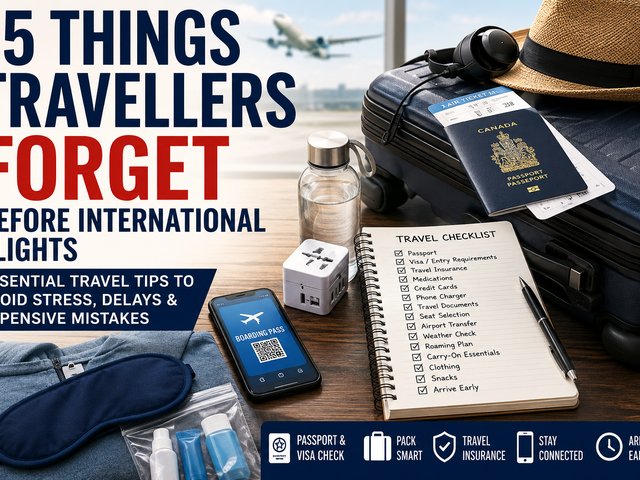
15 Things Travellers Forget Before International Flights | International
The Small Travel Details That Often Create The Biggest Problems International travel is smoother and far less stress... learn more

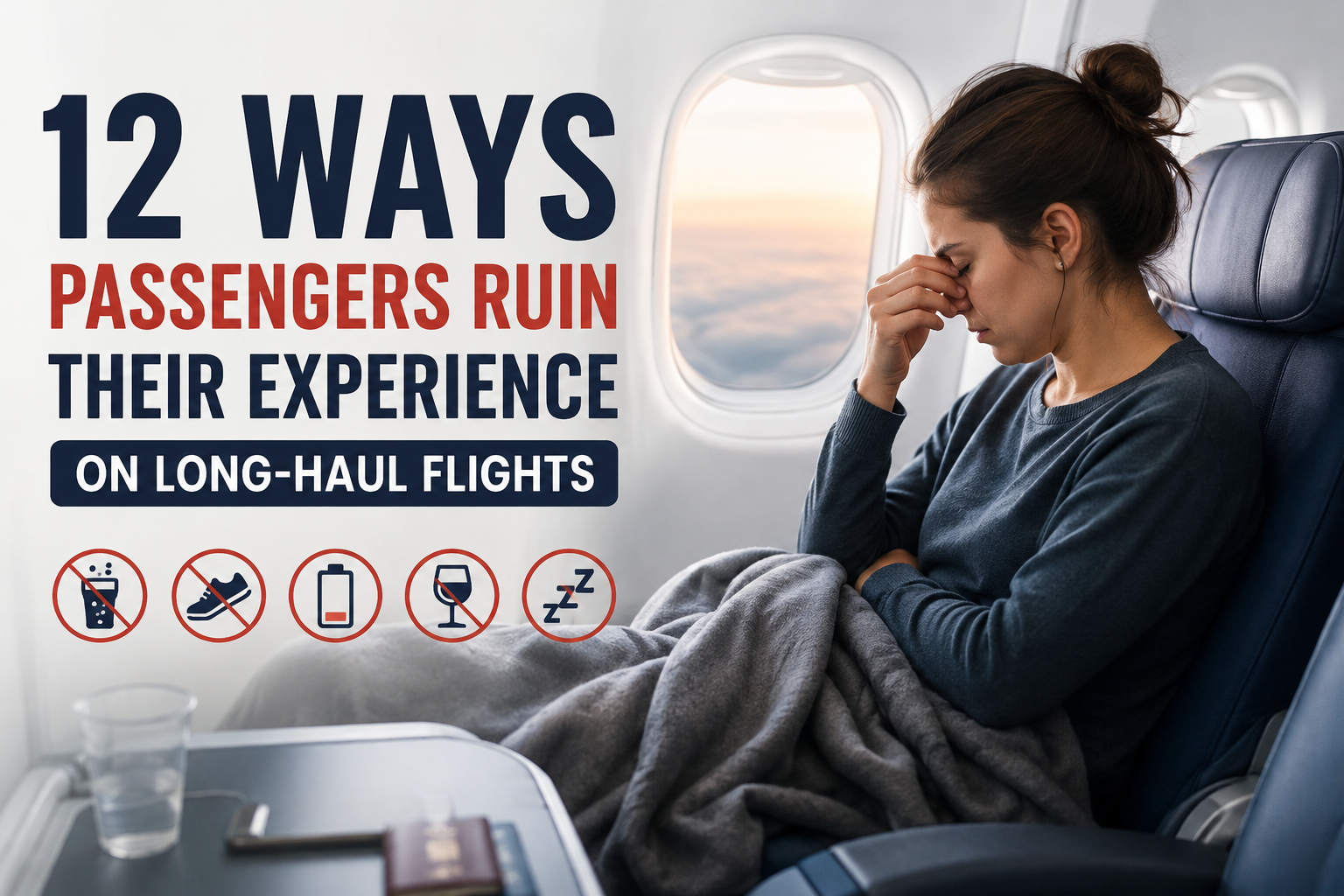
Long-haul flights can be exhausting, but after personally experiencing many flights up to 16-hours in length, and then additional connections that make the travel over 30-hours in total, I have seen many travellers unintentionally make the experience harder on themselves than it needs to be. These are my observations, and I hope that they will help you if you are facing a 12+ hour flight.
Don’t walk around barefoot on the aircraft
Aircraft floors, especially around lavatories, are not as clean as many travellers assume. Wearing socks or footwear helps with hygiene and comfort. We take disposable slippers that we buy in bulk on Amazon. These are cheap, and they really do allow your feet to breathe and are much more comfortable than wearing clunky shoes for 16-hours.
Avoid carbonated drinks and gassy foods
Cabin pressure can increase bloating and discomfort. Fizzy drinks and certain foods may make long flights feel even more uncomfortable. I have stopped drinking soda/pop during flights and only water that comes out of a commercially sold bottle, or my own water bottle.
Stay hydrated during the flight
Cabin air is extremely dry. Drinking water regularly can help reduce fatigue, headaches, dry skin, and jet lag symptoms.
Charge devices before boarding
Passengers often rely heavily on in-seat power, but outlets do not always work. Arriving at the airport and at your destination with fully charged devices reduces stress. Charge your devices fully before boarding the aircraft - always - and carry a power-bank for emergencies. Be aware that more airlines and more countries now have very specific limits on power-banks and it could be confiscated at security. Additionally, note that most aircraft still only have USB connections for charging, so if your device has a different charging port/cable connection, you will need an adaptor cable that will allow you to connect your devices.
Dress in layers
Aircraft temperatures can fluctuate significantly during long-haul flights. Layers allow travellers to stay comfortable whether the cabin is hot or cold. On a recent flight I was “baking hot” and even though I asked the flight attendants if they could reduce the temperature, it was never comfortable. The flip side is being cold and that can be unbearable. Make sure you have a light coat in your carry-on and easy to reach.
Don’t rely solely on airline blankets or pillows
Bringing your own travel pillow, light blanket, or comfort items can make sleeping much easier. There are always questions about the cleanliness of airline blankets, and there are really cheap options on Amazon that you can wash at home and you can feel secure when you pull it up around your neck and face.
Get up and move periodically
Sitting for many hours without movement can lead to stiffness, swelling, and circulation issues. Short walks and stretching help. On long-haul flights I do calf exercises in between standing sessions and this plays a huge role in preventing potential blood clots in the legs.
Be mindful of alcohol consumption
Alcohol can increase dehydration and worsen jet lag. Moderate consumption is usually a better strategy on overnight flights. I do love a glass of red wine on a flight, and on most long-haul flights you can get several glasses. Keep it to a minimum and you will feel better on landing.
Choose comfortable clothing over fashion
Tight or restrictive clothing can become uncomfortable after many hours in a confined seat. I have over time collected a range of travel clothing including specific bottoms and tops for flights. I have many times seen folks in jeans for a long-haul flight and I personally feel that this would be - for me - the most uncomfortable and unforgiving fabric for flying.
Plan sleep strategically
Trying to align sleep with the destination time zone may help reduce jet lag and improve arrival energy levels. I am one that does not sleep well on an aircraft unless I am in Business Class on a lay-flat bed, and so I just align my thinking knowing that I am not going to sleep well. On any flight, when I arrive at destination, I try to push myself to stay awake until my regular sleeping time and that helps me to put my internal clock on the right path.
Pack essential items in your carry-on
Medications, chargers, toiletries, and a change of clothes should always remain accessible in case of delays or lost luggage. Further to that, we have all seen people rummaging through their carry-on looking for this cable, or earphones, etc. Have a small pouch of items that you will want at your seat ready to pull out of your backpack or carry-on so that you don't need to rummage around looking for this or that.
Prepare mentally for the flight experience
Patience, realistic expectations, and planning ahead can significantly improve the overall travel experience. Once I arrive at the airport to begin the travel experience, I give myself and my expectations over to chance. We cannot control what happens during our journey, but we can control how we react and/or deal with situations. Hopefully all goes to plan, but sometimes “stuff” happens and we have no choice but to deal with it.
BONUS - TIP #13
I never arrive for a flight of any length without movie/TV show content on my phone to watch. Why? Aircraft seat back entertainment does not always work. Recently on a flight home from Norway to Canada, a whole section of the Economy cabin had no access to the seat back entertainment and the flight crew could not fix it. For me, I also travel so much and the content on flights is pretty similar across airlines. I have most often watched what I am interested in, so bringing content that I have downloaded from my home streaming services is the best way to go for me. I often only use the seat back entertainment system for the flight map.
My Summary
Long-haul flights are rarely glamorous, even in premium cabins. However, many common in-flight frustrations are preventable with a little preparation. Simple habits such as staying hydrated, dressing comfortably, moving regularly, and planning ahead can make a major difference in how travellers feel both during the flight and upon arrival.
For frequent travellers, these small adjustments often separate an exhausting journey from a far more comfortable and manageable experience.
Travel well, travel safe, and enjoy every element of the journey!
Ken Graham
TravelOnly With Ken
The Small Travel Details That Often Create The Biggest Problems International travel is smoother and far less stress... learn more
"Europe Schweitzer"
 Ken Graham
Sign up for our newsletter to learn about the latest product news and deals. Also receive exclusive offers, contest details and giveaways.