A practical look at how physically demanding Arctic expedition cruising really is, and why most travellers find it far more accessible than they expect.
This article is part 8 of my Northwest Passage expedition series. One of the most common questions travellers ask when they begin looking into Arctic expeditions is whether the experience will be physically demanding.
It is a fair question to ask. The words "expedition travel" tend to conjure images of something rugged and athletic, the kind of trip reserved for serious outdoor enthusiasts. The reality looks quite different. Modern expedition cruising has been built around flexibility, with most ships designed to welcome travellers across a wide range of mobility levels and activity preferences.
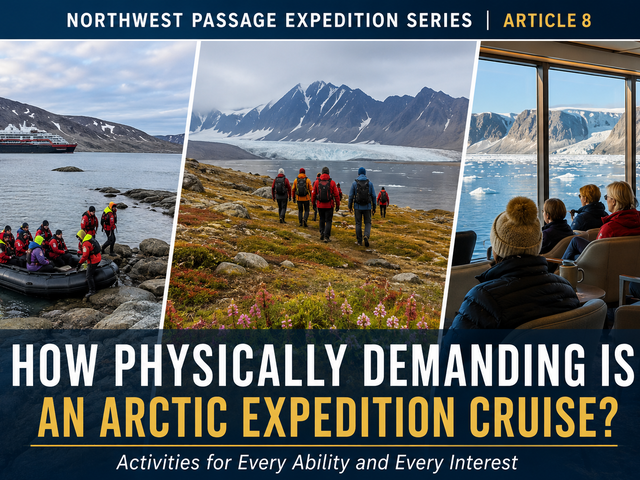
Arctic expedition ships typically structure their shore excursions and onboard programming so that guests can decide for themselves how active they want to be. Some people are drawn to hiking across tundra or paddling a kayak through still Arctic waters. Others are just as happy watching wildlife drift past from the ship's deck or taking a slower, more relaxed Zodiac tour along the coastline. There is no single "right" way to experience the Arctic, and the itinerary is built to reflect that.
Much of the daily exploration depends on the Zodiac boats, which deserve a mention of their own. These rugged inflatable boats are what get guests from the ship to shorelines and inlets that larger vessels simply cannot reach. Getting into one is straightforward: you step from the ship into the boat with help from a member of the expedition team standing right there to steady you. Once everyone is aboard, the ride itself tends to be smooth and stable, even for those who feel nervous about small boats.
Travellers who want to stretch their legs on land have plenty of options too. Most landings include guided walks across the Arctic terrain, and the difficulty varies quite a bit from one outing to the next. Some routes are flat and easy going, while others cover uneven ground or longer stretches. To account for this, expedition teams generally split guests into smaller groups based on pace and interest, so a brisk hiker and someone who prefers a slower stroll can both enjoy the same landing without either one feeling rushed or held back.
None of this is mandatory, and that is really the point. Anyone who would rather skip the landings can stay aboard the ship, settle into the observation lounge, sit in on a lecture from the expedition team, or simply watch the Arctic scenery pass by the window. There is no pressure to do more than feels comfortable.
Part of what puts travellers at ease is the sheer amount of support built into these voyages. The expedition staff are trained specifically to help guests on and off the boats and across uneven landing sites, and every excursion begins with a safety briefing so nobody heads ashore without understanding what to expect.
When it comes down to it, an Arctic expedition asks less of your body than people assume and more of your curiosity. Genuine interest in the natural world, a bit of a sense of adventure, and an openness to experiencing one of the most remote corners of the planet matter far more than physical fitness.
So if you have been holding back because you are not sure an Arctic expedition is within your physical capabilities, it is worth reconsidering. Most guests find the experience considerably more accessible than they had imagined.
And almost without exception, once they have seen the Arctic for themselves, they say the same thing.
They wish they had gone sooner.
If the idea of exploring the Arctic, or sailing the legendary Northwest Passage, has sparked your curiosity, feel free to reach out. I have reserved a limited number of cabins for this 2027 expedition voyage and would be glad to share more about the itinerary and current pricing.
I am Ken Graham - Travel Advisor - Adventurer - Cruise Specialist