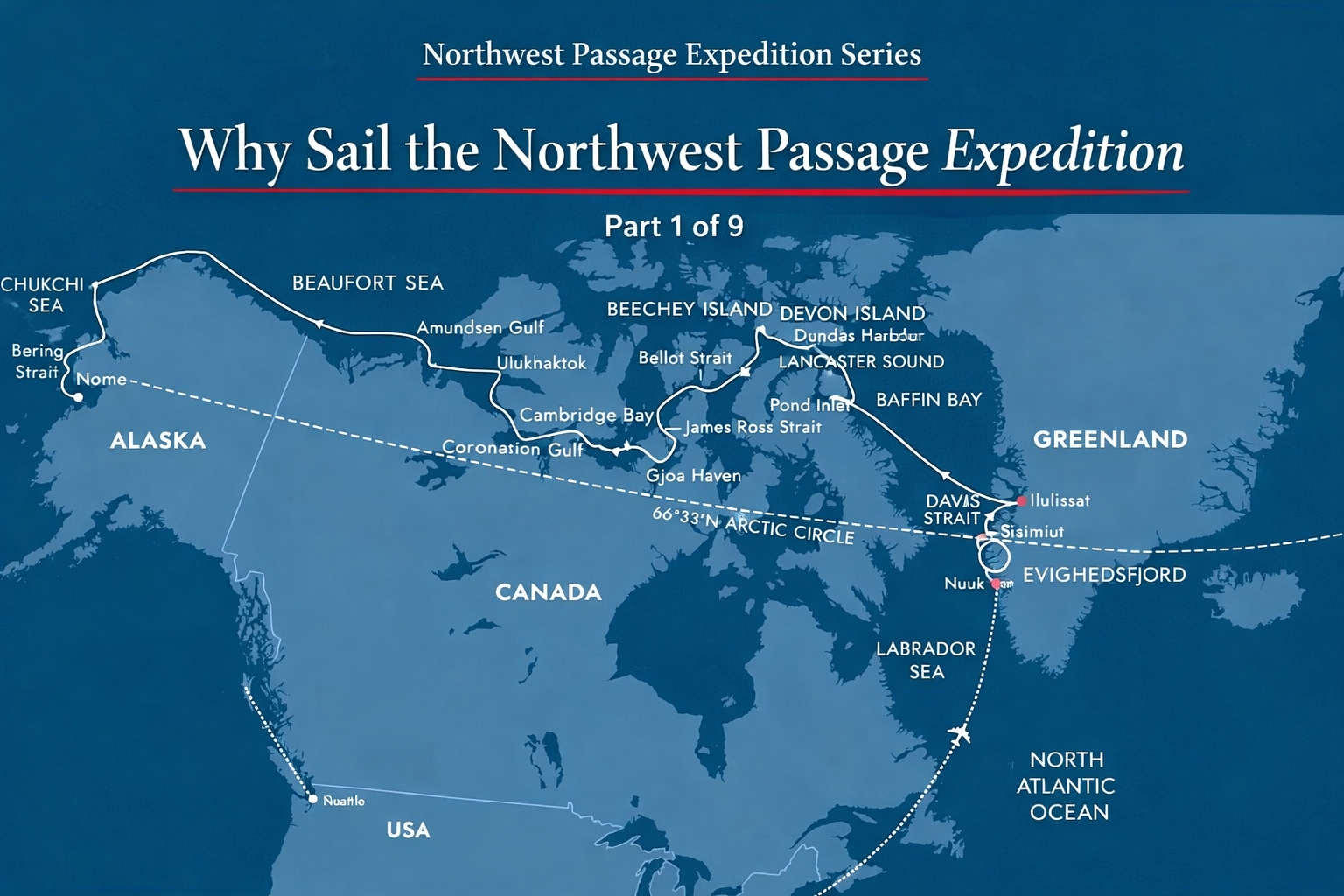
This article is the first in a short series exploring one of the most remarkable expedition voyages available today: sailing the legendary Northwest Passage. In this first piece, I want to explain why this journey has fascinated explorers and travellers for centuries.
Why the Northwest Passage Should Be on Every Explorer’s Bucket List
And Why I Reserved Space for My Clients in 2027
Some trips are vacations.
Others are adventures.
And then there are journeys that feel like stepping into the pages of history.
In August of 2027, I will be sailing the legendary Northwest Passage with HX Expeditions on a 25-day expedition through Greenland and Arctic Canada. It is one of the most remote and fascinating voyages available anywhere in the world.
This is not simply another cruise itinerary. It is a journey through a place that explorers spent centuries trying to navigate. For hundreds of years, ships searched for a route connecting the Atlantic and Pacific Oceans through the maze of Arctic islands that form northern Canada. Many expeditions failed. Some never returned. When Norwegian explorer Roald Amundsen finally completed the passage in the early 1900s, it became one of the greatest achievements in exploration history.
Today, modern expedition ships can navigate this same route, but only during a very short window each summer when sea ice retreats enough to allow passage. That narrow opportunity each year is exactly what makes this journey so extraordinary.
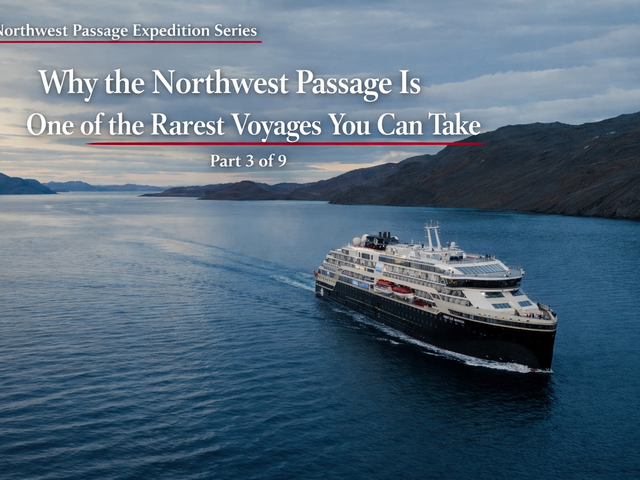
It is also why relatively few people will ever experience it.
A Journey Through One of the Last Wild Places on Earth
The Canadian Arctic remains one of the most remote regions on the planet. The waterways of the Northwest Passage stretch across thousands of kilometres of islands, fjords, and channels that are often still dotted with drifting ice.
There are no major cruise ports here. No large cities. In many places there are only small Arctic communities separated by vast distances of wilderness.
For travellers who love exploration, this environment offers something that has become increasingly rare in modern travel: true remoteness.
Standing on the deck of an expedition ship in the Arctic, you are looking out at landscapes that remain largely unchanged since the age of exploration. Vast tundra stretches to the horizon, glaciers descend toward the sea, and the quiet of the Arctic can feel almost surreal.
Extraordinary Wildlife Encounters
The Arctic is also one of the world’s last great wildlife frontiers.
During a Northwest Passage expedition, it is possible to see polar bears moving across sea ice, whales surfacing in the cold Arctic waters, and walrus resting along remote coastlines. Arctic foxes and caribou roam the tundra while seabirds circle overhead in the clear northern air.
The late summer season is particularly rewarding for wildlife viewing because retreating sea ice opens waterways and allows animals to move more freely through the region.
For photographers, nature enthusiasts, and travellers who appreciate pristine ecosystems, the Arctic offers moments that are impossible to replicate anywhere else.
Encounters With Arctic Culture
This journey is not only about landscapes and wildlife. It is also about people.
Along the route, expedition voyages may visit small Arctic communities where Inuit culture has thrived for thousands of years. These communities offer a rare opportunity to learn about traditions, art, storytelling, and daily life in one of the most challenging environments on Earth.
Experiences like these provide a deeper perspective on the Arctic. They remind travellers that this region is not simply a wilderness, but also a homeland with rich cultural traditions and remarkable resilience.
What Makes Expedition Travel Different
Unlike traditional cruises that follow a rigid port schedule, expedition voyages are designed to explore.
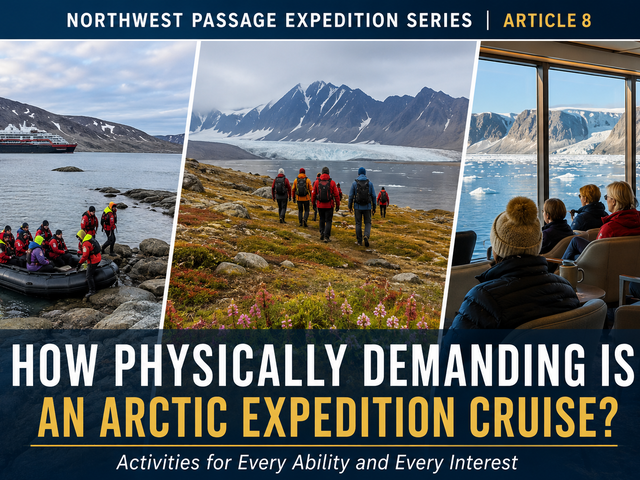
Daily activities often depend on weather, ice conditions, and wildlife sightings. One day may involve exploring a remote fjord by Zodiac. Another day may bring a landing on Arctic tundra for a guided walk or the chance to observe wildlife from the ship.
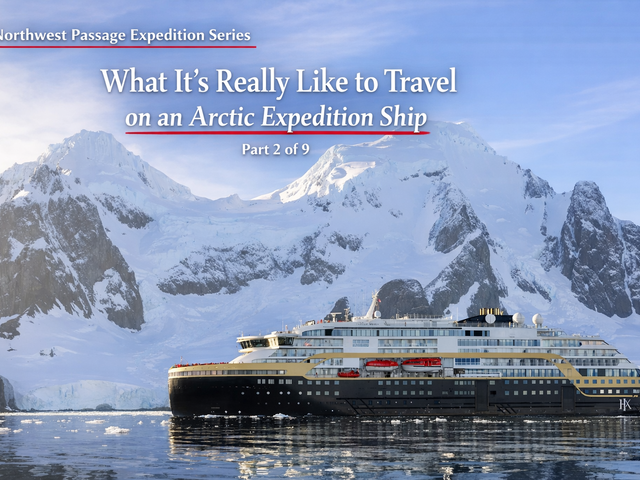
Onboard expedition teams typically include scientists, historians, and naturalists who provide lectures and insights about the environment, wildlife, and exploration history of the region.
This combination of learning and exploration is what makes expedition travel so rewarding.
Why I Reserved Space for My Clients
Because voyages like this are rare, I made the decision to reserve space for my clients well in advance.
This does not mean a traditional group trip where everyone follows a structured itinerary together. Expedition voyages are already highly guided by the expedition team onboard, so travellers still enjoy the same independent experience that any guest on the ship would have.
What my reserved space does provide is something important: price protection.
Cruise prices—especially for expedition voyages—almost always increase as cabins begin to sell and the sailing date approaches. By securing space early, I have access to contracted pricing that remains fixed for a limited period.
That means travellers who join through my reserved space may be able to secure pricing that is lower than what the same voyage could cost later as demand increases.
However, that contracted pricing does not last forever. Once the price protection window expires or my reserved cabins are sold, pricing will revert to whatever the current market rate is at that time.
In other words, the advantage exists now, but it will not remain indefinitely.
My Northwest Passage Expedition in 2027
The voyage I will be sailing in August 2027 is a 25-day expedition with HX Expeditions navigating the legendary waterways of the Northwest Passage.
It is one of the most ambitious expedition itineraries available anywhere in the world today, combining dramatic Arctic landscapes, extraordinary wildlife, and a journey through one of the greatest exploration routes in history.
I will be sharing much more about this journey over the coming months, including what expedition travel is really like, how Arctic voyages work, and what travellers should expect when exploring one of the most remote regions on Earth.
Why Book an Expedition Through a Travel Advisor
Expedition voyages are very different from traditional cruises, and having an experienced advisor can make a significant difference. Arctic expeditions involve complex itineraries, specialized equipment, and a limited number of cabins that often sell out years in advance.
As a travel advisor who focuses on expedition and premium cruising, I work directly with the expedition line to secure space early, monitor pricing, and guide clients through the many details involved in preparing for a journey like this. That includes understanding cabin options, booking timelines, travel insurance considerations, and even what to expect during the expedition itself.
For many travellers, having someone who understands these voyages and can provide guidance before, during, and after the trip adds an extra level of confidence when planning such a significant adventure.
Final Thought
Some trips are about relaxation.
Others are about discovery.
The Northwest Passage offers both, but above all it offers something increasingly rare in modern travel: the feeling of true exploration.
And for travellers who have ever dreamed about experiencing the Arctic, this is one of the most remarkable journeys you can take.
If the Northwest Passage is something that sparks your curiosity, this may be the perfect time to start the conversation.
Listen to Alex McNeil - HX Chief Expedition Officer - and Tudor Morgan of HX tell us how More People Have Stood On The Summit Of Mount Everest Than Sailed The Northwest Passage
See the full itinerary and more information here
View my personal travel experiences here
Ken
TravelOnly with Ken
Luxury, Ocean, River & Expedition Cruise Specialist
#travelonlywithken #luxurycruising